د.إ0.00
Complete Guide to Promotional Product Printing for Businesses
Quick Answer
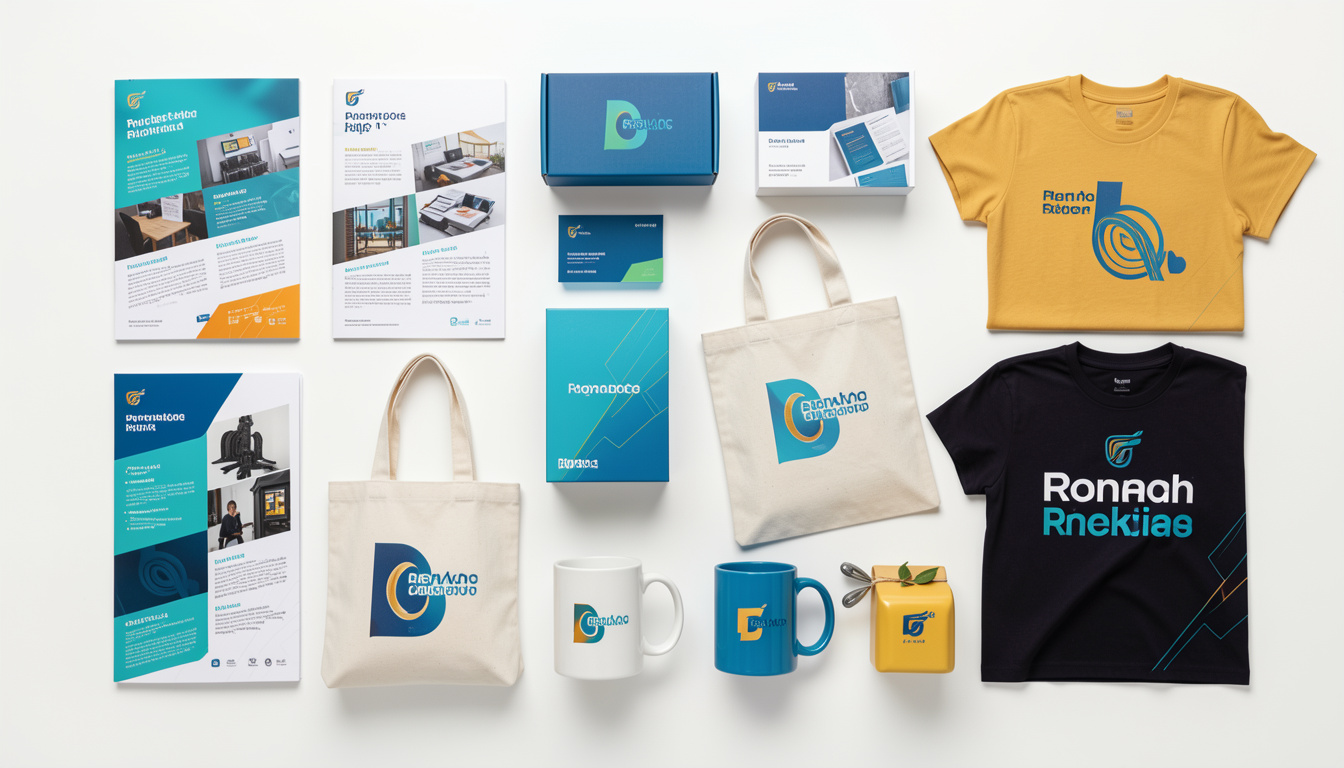
Promotional product printing is the process of applying a company’s logo, branding, artwork, or marketing message onto physical products used for brand awareness, customer engagement, corporate gifting, and employee branding.
Common examples include branded pens, notebooks, bags, drinkware, apparel, technology accessories, and customised corporate gifts.
Effective promotional printing combines the right product choice, suitable printing method, quality materials, and consistent branding to create useful items that keep businesses visible long after an event or customer interaction.
Key Takeaways
- Promotional products are physical marketing tools designed to increase brand visibility.
- The effectiveness of branded merchandise depends on usefulness, print quality, design consistency, and audience relevance.
- Different products require different printing techniques, including screen printing, embroidery, UV printing, laser engraving, and heat transfer.
- Businesses should select promotional items based on their target audience, industry, campaign goals, and budget.
- UAE businesses commonly use promotional products for exhibitions, conferences, corporate gifting, employee branding, and customer relationship campaigns.
Introduction
In a competitive business environment, companies are constantly searching for effective ways to remain memorable. While digital marketing channels such as social media, email campaigns, and online advertising are important, physical brand experiences continue to influence customer perception.
Promotional product printing allows businesses to turn everyday products into physical brand experiences. A useful branded item received by a customer, employee, or business partner becomes an extension of the company’s identity rather than simply a giveaway.
The effectiveness of promotional products depends on three factors: selecting the right product, using an appropriate printing method, and ensuring the final design represents the brand professionally.
For UAE businesses, where networking events, exhibitions, and corporate relationships play a significant role, promotional printing remains an effective way to create meaningful physical connections with customers, partners, and employees.
This guide explains promotional product categories, printing methods, design considerations, cost factors, common mistakes, and professional recommendations for creating successful branded merchandise campaigns.
What Is Promotional Product Printing?
Promotional product printing is the process of customising products with a company’s branding elements, including:
- Logo
- Brand colours
- Company name
- Marketing message
- Website or contact details
- Campaign artwork
- Event-specific designs
The purpose is to increase brand awareness by placing the company identity on products that customers or employees can use regularly.
Unlike traditional advertising where the customer only sees the message for a short period, promotional products create repeated exposure through physical ownership.
Why Businesses Use Promotional Products
Businesses use promotional products to create physical brand touchpoints that support marketing, customer relationships, employee engagement, and corporate communication.
| Business Goal | How Promotional Products Support Business Objectives |
|---|---|
| Brand awareness | Keeps the company visible by placing the brand on useful products customers see and use regularly. |
| Customer relationships | Creates appreciation and strengthens connections with clients, partners, and prospects. |
| Exhibition marketing | Helps businesses attract visitors, create conversations, and improve brand recall at trade shows and events. |
| Lead generation | Provides a memorable physical touchpoint that supports follow-up after meetings or networking events. |
| Employee branding | Builds company culture by providing branded uniforms, welcome kits, and workplace products. |
| Corporate gifting | Helps businesses recognise important clients, partners, and stakeholders through thoughtful branded gifts. |
| Brand positioning | Allows companies to communicate quality, professionalism, sustainability, or innovation through product selection and presentation. |
Promotional Product Usage in UAE Businesses
In the UAE, promotional products are widely used because business relationships are often built through exhibitions, conferences, networking events, and face-to-face interactions.
Common applications include:
- Trade exhibitions
- Corporate conferences
- Customer appreciation campaigns
- Employee programmes
- Product launches
The most effective products are selected according to the audience and environment. For example, exhibition visitors may receive practical items such as bags or notebooks, while VIP clients may receive premium gifts with specialised finishing.
The Role of Promotional Products in Brand Identity
Promotional products are physical extensions of a company’s brand identity. They communicate more than a logo; they influence how customers perceive the business through product quality, material selection, design style, and overall presentation.
The promotional product itself sends a message about the company.
| Brand Position | Suitable Promotional Product Approach |
|---|---|
| Premium and luxury brands | Executive gifts, leather accessories, metal pens, engraved products |
| Eco-conscious brands | Recycled notebooks, reusable bottles, sustainable bags |
| Modern technology brands | Wireless chargers, smart accessories, innovative products |
| Professional service companies | Corporate stationery, premium notebooks, business accessories |
| Employee-focused organisations | Branded apparel, welcome kits, workplace products |
Types of Promotional Products and How Businesses Choose the Right Items
Types of Promotional Products Businesses Use
| Promotional Product Category | Common Examples | Best Used For |
|---|---|---|
| Corporate Stationery | Pens, notebooks, planners, folders | Meetings, conferences, daily office use |
| Promotional Bags | Tote bags, backpacks, laptop bags | Exhibitions, events, customer giveaways |
| Branded Apparel | Polo shirts, T-shirts, uniforms, caps | Employee branding, events, outdoor campaigns |
| Drinkware | Mugs, bottles, tumblers | Daily brand visibility and customer gifts |
| Technology Products | Chargers, USB drives, accessories | Corporate gifting and business events |
| Eco-Friendly Products | Recycled notebooks, reusable bags, sustainable items | Sustainability campaigns and responsible branding |
Promotional products are available in many categories, but the most effective choices are not always the most expensive. Successful campaigns focus on products that are useful, relevant to the audience, and aligned with the company’s brand image.
1. Corporate Stationery and Office Products
Corporate stationery remains one of the most widely used promotional product categories because these items are practical and regularly used in professional environments.
Common examples include:
- Branded notebooks
- Pens
- Planners
- Folders
Why Businesses Choose Office Products
Corporate stationery remains popular because these products naturally fit into professional environments. Items such as notebooks, pens, and folders support meetings, training sessions, and daily workplace activities while keeping the brand visible.
- Best suited for:
- Corporate meetings
- Conferences
- Training programmes
- Professional networking events
2. Promotional Bags and Carry Items
Branded bags are among the most effective promotional products because they combine usefulness with high visibility.
Popular options include:
| Product Type | Common Uses |
|---|---|
| Tote bags | Retail promotions, eco-friendly campaigns, exhibitions |
| Laptop bags | Corporate gifts and employee branding |
| Backpacks | Universities, technology companies, events |
| Travel bags | Premium corporate gifting |
| Drawstring bags | Sports events and outdoor campaigns |
Why Promotional Bags Work
Bags provide strong visibility because they are practical products that customers often continue using after receiving them.
A professionally printed tote bag distributed at an exhibition can continue creating brand visibility when attendees use it after the event.
3. Branded Clothing and Apparel
Custom apparel helps businesses create a consistent professional appearance for employees, event teams, and promotional campaigns.
Common promotional clothing includes:
- Polo shirts
- T-shirts
- Jackets
- Caps
- Uniforms
- Safety vests
- Sportswear
Benefits of Branded Apparel
Professional clothing helps businesses:
- Improve employee recognition
- Create a consistent company image
- Increase brand visibility at events
- Build team identity
For UAE businesses, branded apparel is commonly used in:
- Exhibitions
- Hospitality businesses
- Retail stores
- Construction companies
- Corporate events
- Outdoor promotions
The printing or embroidery method should be selected based on the fabric type, usage frequency and desired appearance. For UAE businesses, apparel selection should also consider comfort, climate conditions, workplace environment, and whether the clothing will be used indoors or outdoors.
4. Drinkware and Lifestyle Products
Branded drinkware is one of the most popular promotional categories because it is used frequently in homes, offices and outdoor environments.
Examples include:
- Coffee mugs
- Water bottles
- Travel tumblers
- Thermos flasks
- Glassware
Why Drinkware Is Effective
Drinkware works well as a promotional product because it combines practical use with a relatively large branding surface, allowing companies to create functional items that remain connected to everyday routines.
For example:
A company logo printed on a reusable water bottle may be seen every day at an office, gym or meeting environment.
Drinkware works well because it combines daily usefulness with a practical branding area. Items such as reusable bottles and mugs can maintain regular brand visibility in offices, meetings, and everyday environments.
5. Technology Promotional Products
Technology Promotional Products
Technology accessories are popular corporate gifts because they combine practical value with modern business lifestyles.
Common examples include:
- Wireless chargers
- Power banks
- USB devices
- Laptop accessories
These products are commonly used for conferences, client gifting, and technology-focused campaigns where functionality is important.
6. Eco-Friendly Promotional Products
Eco-Friendly Promotional Products
Eco-friendly promotional products allow businesses to communicate sustainability values through useful items.
Common examples include:
- Recycled notebooks
- Reusable bags
- Sustainable drinkware
- Organic cotton products
Businesses should ensure sustainability claims are genuine and supported by product materials and supplier information.
How to Choose the Right Promotional Product
Choosing the right promotional product requires balancing audience needs, campaign objectives, product usefulness, and brand positioning.
The most effective promotional products are not selected only by price or popularity. They are chosen because they provide value to the recipient while supporting the company’s marketing objective.
| Decision Factor | Questions Businesses Should Ask |
|---|---|
| Campaign Objective | Is the goal brand awareness, customer appreciation, lead generation, employee engagement, or corporate gifting? |
| Target Audience | Who will receive the product and how will they use it? |
| Product Usefulness | Will the recipient use the product regularly? |
| Brand Positioning | Does the product reflect the company’s quality and values? |
| Environment | Will it be used indoors, outdoors, at events, or in professional settings? |
| Budget | Does the investment match the expected marketing outcome? |
The recipient should influence product selection. Businesses should consider where the product will be used, how frequently it will be used, and whether it matches the customer’s professional environment or lifestyle.
2. Select Products Based on Campaign Objectives
| Marketing Goal | Suitable Promotional Products |
|---|---|
| Increase brand awareness | Bags, apparel, drinkware |
| Generate exhibition leads | Pens, notebooks, USB drives |
| Reward customers | Premium gifts, customised accessories |
| Build employee culture | Uniforms, welcome kits |
| Promote sustainability | Reusable and eco-friendly products |
3. Consider Product Quality
The promotional product represents the company providing it, so quality should match the brand position.
Businesses should evaluate:
- Product durability
- Material quality
- Printing or branding accuracy
- Packaging presentation
- Overall user experience
A premium brand may require higher-quality materials and finishing, while a large-scale awareness campaign may prioritise practical products that can be distributed efficiently.
4. Consider Usage Frequency
Products that naturally fit into daily routines usually create stronger brand exposure.
Examples of frequently used promotional products include:
- Pens
- Notebooks
- Water bottles
- Bags
- Desk accessories
However, frequency alone should not determine selection. A product must also be relevant and valuable to the intended audience.
Professional Recommendation
The best promotional products are not simply items with a logo. They are carefully selected brand experiences.
A successful campaign combines:
Relevant Product + Quality Printing + Strong Branding + Audience Understanding = Effective Promotional Marketing
Businesses should focus on creating value for the recipient rather than distributing products that are quickly discarded.
Promotional Product Printing Method Selection Guide: Choosing the Right Technique
The printing technique used for promotional products directly affects the appearance, durability, cost, and suitability of the finished branded item.
The correct method depends on:
- Product material
- Artwork complexity
- Expected usage
- Required finish and durability
A cotton T-shirt, metal bottle, acrylic award, and executive pen require different branding techniques because each material reacts differently to printing and finishing processes.
| Product Type | Recommended Printing Method | Reason |
|---|---|---|
| T-shirts and fabric bags | Screen printing or embroidery | Durable and suitable for textiles |
| Corporate uniforms | Embroidery | Premium appearance and long-term durability |
| Metal pens and premium gifts | Laser engraving | Permanent and professional finish |
| Acrylic products | UV printing | Detailed full-colour branding |
| Mugs and coated products | Sublimation or UV printing | Vibrant colour reproduction |
| Short-run custom apparel | Heat transfer | Suitable for detailed designs and smaller quantities |
Understanding the main printing techniques helps businesses make better decisions when planning branded merchandise.
1. Screen Printing
What Is Screen Printing?
Screen printing is one of the most widely used methods for promotional product branding. It involves transferring ink through a mesh screen onto the product surface.
Each colour in the design is applied separately, making it highly effective for simple and bold artwork.
Common Applications
Screen printing is commonly used for:
- T-shirts
- Polo shirts
- Tote bags
- Fabric items
- Event giveaways
- Promotional apparel
Advantages of Screen Printing
| Benefit | Explanation |
|---|---|
| Cost-effective for large quantities | Ideal for bulk promotional campaigns |
| Strong colour coverage | Produces bold and visible designs |
| Durable results | Suitable for frequently used products |
| Works on fabrics | Excellent for apparel and textile products |
Best For:
Best suited for: Large-volume apparel, tote bags, and fabric promotional products where consistent colour coverage and cost efficiency are important.
Example:
For example, businesses ordering large quantities of exhibition T-shirts often choose screen printing because it provides reliable quality and cost efficiency at scale.
2. Embroidery
What Is Embroidery?
Embroidery is a decoration technique where a logo or design is stitched directly onto fabric using coloured threads.
It creates a premium, professional and textured appearance.
Common Applications
Embroidery is commonly used for:
- Polo shirts
- Corporate uniforms
- Jackets
- Caps
- Workwear
- Hospitality clothing
Advantages of Embroidery
| Benefit | Explanation |
|---|---|
| Premium appearance | Creates a professional corporate look |
| Highly durable | Threads withstand repeated washing |
| Long-lasting branding | Suitable for uniforms and workwear |
| Adds texture | Creates a high-quality finish |
Best For:
Best suited for: Corporate uniforms and apparel where durability, professional appearance, and repeated washing resistance are important. Common UAE applications include hospitality, security, facility management, and corporate teams.
Common UAE examples include:
- Hotels
- Restaurants
- Security companies
- Real estate firms
- Corporate offices
3. UV Printing
What Is UV Printing?
UV printing uses ultraviolet light to instantly cure ink onto a product surface. This allows printing directly onto a wide range of materials.
It is especially useful for detailed, full-colour designs.
Common Applications
UV printing is used for:
- Acrylic products
- Phone accessories
- Promotional gifts
- Plastic items
- Wooden products
- Corporate awards
- Premium merchandise
Advantages of UV Printing
| Benefit | Explanation |
|---|---|
| Full-colour printing | Suitable for detailed artwork and images |
| Prints on many materials | Works on rigid surfaces |
| Fast production | Ink cures immediately |
| High detail quality | Suitable for complex designs |
UV printing is particularly useful when a promotional product has a rigid surface and requires detailed graphics, gradients, photographs, or multi-colour branding.
Best For:
Businesses requiring customised products with detailed graphics, photographs or multiple colours.
4. Laser Engraving
What Is Laser Engraving?
Laser engraving uses a focused laser beam to permanently remove or alter the surface of a material, creating a precise engraved design.
The design becomes permanently engraved into the material surface rather than applied as a separate ink layer.
Common Applications
Laser engraving is used for:
- Metal pens
- Stainless steel bottles
- Wooden gifts
- Premium corporate awards
- Leather accessories
Advantages of Laser Engraving
| Benefit | Explanation |
|---|---|
| Extremely durable | Does not peel or fade |
| Premium appearance | Creates an elegant finish |
| Precise details | Suitable for small logos and text |
| Professional look | Ideal for executive gifts |
Because the design is created by altering the surface of the material rather than applying ink, laser engraving is commonly selected for products where long-term durability and premium presentation are priorities.
Best For:
Premium corporate gifting where quality and longevity are important.
Example:
A financial company providing engraved metal pens to VIP clients creates a more premium impression than a standard printed giveaway.
5. Heat Transfer Printing
What Is Heat Transfer Printing?
Heat transfer printing applies printed artwork onto products using heat and pressure.
The design is transferred from a special film or paper onto the surface. Heat transfer is commonly used when businesses need detailed artwork, multiple colours, or smaller promotional apparel orders without the setup requirements of traditional screen printing.
Common Applications
Used for:
- T-shirts
- Sportswear
- Promotional clothing
- Custom uniforms
Advantages
- Suitable for detailed artwork
- Good for smaller quantities
- Allows multiple colours
- Useful for personalised products
Best For:
Short-run promotional campaigns, customised apparel and designs requiring complex graphics.
6. Sublimation Printing
What Is Sublimation Printing?
Sublimation printing uses heat to transfer dye directly into specially coated materials or polyester fabrics.
The ink becomes part of the surface rather than sitting on top.
Common Applications
Used for:
- Sportswear
- Mugs
- Mouse pads
- Polyester textiles
- Promotional accessories
Advantages
- Produces vibrant colours
- Allows full-colour designs
- Creates smooth finishes
- Provides excellent detail
Sublimation works best on polyester fabrics and specially coated products because the dye bonds with the surface during the heating process.
Best For:
Products requiring colourful, photo-quality designs.
Comparison of Promotional Product Printing Techniques
| Printing Method | Best Products | Durability | Ideal Quantity | Finish | Artwork Suitability |
|---|---|---|---|---|---|
| Screen Printing | T-shirts, bags, textiles | High | Medium to large quantities | Bold colours | Simple logos and designs |
| Embroidery | Uniforms, polos, jackets | Very high | Medium quantities | Premium textured finish | Logos and limited detail |
| UV Printing | Acrylic, plastic, gifts | High | Small to medium quantities | Full-colour detail | Complex graphics |
| Laser Engraving | Metal, wood, premium gifts | Excellent | Small to medium quantities | Elegant permanent finish | Simple logos and text |
| Heat Transfer | Apparel | Medium to high | Small quantities | Detailed graphics | Multi-colour artwork |
| Sublimation | Mugs, polyester products | High | Small to medium quantities | Vibrant colour | Photo-quality designs |
How Businesses Should Choose a Printing Method
A practical decision process:
Step 1: Identify the Product Material
Different materials require different techniques.
Examples:
- Cotton → Screen printing or embroidery
- Metal → Laser engraving or UV printing
- Acrylic → UV printing
- Polyester → Sublimation
Step 2: Consider the Brand Image
Ask what message the product should communicate.
| Brand Position | Recommended Technique |
|---|---|
| Premium corporate image | Laser engraving, embroidery |
| High-volume marketing campaign | Screen printing |
| Creative colourful branding | UV printing, sublimation |
| Professional uniforms | Embroidery |
Step 3: Evaluate Usage Conditions
Professional Printing Recommendation
The correct promotional printing method is not always the cheapest option. It should be selected based on the product material, expected usage, brand positioning, and required durability.
The best promotional printing results come from matching:
Product Material + Printing Technique + Usage Conditions + Brand Requirements
A suitable technique improves durability, appearance, and long-term brand presentation.
How to Design Effective Promotional Products: Branding, Artwork and Design Guidelines
A professionally designed promotional product balances brand identity, product limitations, and printing requirements.
The design must work in the real world, not only on a computer screen. Factors such as product size, material, printing method, colour accuracy, and artwork quality directly influence the final result.
Successful promotional product design combines:
Clear Branding + Correct Artwork + Suitable Printing Method + Practical Product Placement
A well-designed promotional product should achieve three goals:
- Make the brand immediately recognisable.
- Present the company in a professional way.
- Encourage the recipient to continue using the product.
Poor design choices, such as overcrowded artwork, incorrect colours or unsuitable logo placement, can reduce the effectiveness of even a high-quality promotional item.
Professional promotional product design considers:
- Product size and shape
- Printing area limitations
- Brand guidelines
- Logo visibility
- Colour accuracy
- Audience expectations
- Intended usage environment
1. Define the Purpose of the Product
Before designing promotional products, businesses should decide what role the product will play.
Examples:
| Purpose | Design Approach |
|---|---|
| Brand awareness | Clear logo visibility and simple recognition |
| Premium gifting | Minimal branding with high-quality finishes |
| Event promotion | Include campaign messaging or event details |
| Employee branding | Consistent company identity across apparel and accessories |
The design approach should match how and where the product will be used.
2. Use Brand Guidelines Consistently
Promotional products should follow the same visual identity used across other company materials.
Consistency includes:
- Logo design
- Brand colours
- Typography
- Image style
- Tone of messaging
When promotional products match existing branding, customers immediately connect the item with the company.
3. Choose the Correct Logo Version
Many businesses have multiple logo variations designed for different applications.
Common logo versions include:
- Full-colour logo
- Single-colour logo
- White/reversed logo
- Horizontal logo
- Icon-only logo
The correct version depends on the product surface and printing method.
Examples:
| Product | Suitable Logo Choice |
|---|---|
| Dark fabric clothing | White or light-colour logo |
| Metal pens | Simplified logo for engraving |
| Small promotional items | Icon or compact logo version |
| Premium gifts | Minimal single-colour branding |
Using a complex logo on a small product can make the design unclear.
4. Consider Logo Size and Placement
Logo placement strongly affects visibility and professional appearance.
A logo must be large enough to remain readable while maintaining a balanced appearance with the product design.
Common Placement Areas
Apparel
Popular locations include:
- Left chest
- Sleeve
- Back area
- Cap front
Bags
Common locations:
- Front centre
- Lower corner
- Handle area
Drinkware
Common locations:
- Front-facing area
- Opposite the handle
- Full-wrap printing
Stationery
Common locations:
- Cover
- Bottom corner
- Pen barrel
The placement should consider how the product is naturally viewed during use.
5. Keep Designs Simple and Recognisable
Promotional products often have limited printing space. A simple design usually creates better results.
Effective promotional designs typically include:
✓ Clear logo
✓ Limited colours
✓ Readable text
✓ Strong contrast
✓ Minimal unnecessary details
Avoid:
✗ Too much text
✗ Small unreadable information
✗ Complex images
✗ Multiple competing messages
A promotional product should communicate the brand quickly.
6. Select Colours Carefully
Colours play an important role in brand recognition and printing accuracy.
Businesses should consider:
- Brand colour consistency
- Product background colour
- Printing limitations
- Colour contrast
For example:
A dark blue logo may not appear clearly on a black product. A lighter version or alternative printing method may be required.
Colour Considerations by Product Type
| Product | Important Colour Consideration |
|---|---|
| Clothing | Contrast between fabric and print |
| Metal products | Engraving visibility |
| Plastic items | Surface colour limitations |
| Bags | Logo readability from distance |
7. Prepare Correct Artwork Files
Professional promotional printing requires suitable artwork files.
Recommended file formats:
- AI (Adobe Illustrator)
- EPS
- PDF vector files
- SVG
Vector artwork is preferred because it can be resized without losing quality.
Businesses should provide:
- Correct logo files
- Brand colour references
- Required dimensions
- Printing instructions
Poor-quality images from websites or screenshots often produce unclear results.
8. Understand Printing Area Limitations
Every promotional product has a maximum printable area.
A design created for a large poster cannot simply be transferred onto a pen or small gift item.
Examples:
| Product | Design Consideration |
|---|---|
| Pen | Small logo, simplified artwork |
| Mug | Wrap-around or centred design |
| T-shirt | Larger visual area available |
| USB drive | Limited branding space |
Professional printers adjust artwork based on the actual product dimensions.
9. Design for the Recipient, Not Only the Company
The most successful promotional products provide value to the user.
Before finalising a design, ask:
- Would customers actually use this product?
- Does it look professional?
- Does it represent the brand correctly?
- Is the message relevant to the audience?
A useful product with thoughtful design creates stronger brand engagement.
Common Promotional Product Design Mistakes
1. Using Low-Resolution Logos
Blurry logos reduce perceived professionalism. Always provide vector artwork such as AI, EPS, SVG, or print-ready PDF files.
2. Adding Too Much Information
Including phone numbers, addresses and long messages can make products look crowded.
Solution: Use only essential information.
3. Ignoring Product Material
A design that works on paper may not work on fabric, metal or plastic.
Solution: Adapt artwork based on the printing technique.
Professional Promotional Product Design Checklist
Before production, confirm:
☐ Logo quality is suitable for printing
☐ Correct logo version is selected
☐ Brand colours are accurate
☐ Artwork matches product dimensions
☐ Text is readable
☐ Printing method is suitable
☐ Artwork uses correct colour specifications
☐ Final proof has been approved
☐ Product appearance matches brand standards
Professional Printing Recommendation
Well-designed promotional products strengthen brand recognition by combining useful products, professional artwork, and suitable printing techniques. Businesses should treat promotional merchandise as an extension of their overall brand identity rather than simply adding a logo to a product.
A successful design combines:
Clear Branding + Suitable Product + Professional Artwork + Quality Printing = Stronger Brand Impact
Businesses should treat promotional products as part of their overall brand identity rather than simple giveaways.
Promotional Product Printing for Different Industries: UAE Business Applications and Examples
How Different Industries Use Promotional Products
Promotional products are not limited to one type of business. Almost every industry can use branded merchandise to improve visibility, strengthen relationships and create memorable customer experiences.
However, the most effective promotional products depend on the industry, audience and business objectives.
A product that works well for a technology company may not be suitable for a luxury hotel or healthcare provider. Professional promotional printing requires understanding the environment where the product will be used.
For UAE businesses, promotional products are commonly used for:
- Corporate events
- Trade exhibitions
- Customer appreciation campaigns
- Employee branding
- Product launches
- Conferences
- Seasonal campaigns
- Business networking activities
1. Real Estate Industry Promotional Products
The real estate sector depends heavily on trust, relationships and memorable interactions. Promotional products help property companies remain connected with buyers, investors and partners.
Suitable Promotional Products
| Product | Business Purpose |
|---|---|
| Premium notebooks | Client meetings and property consultations |
| Branded pens | Everyday customer use |
| Keychains | Property handover gifts |
| Tote bags | Property exhibitions |
| Luxury gift sets | VIP clients and investors |
Practical Example
A real estate developer launching a new residential project may provide visitors with branded folders, brochures and premium notebooks during property exhibitions.
These items continue reminding potential buyers about the project after the event.
2. Hospitality and Hotel Industry Promotional Products
Hotels and hospitality businesses rely on customer experience and brand perception. Promotional products can enhance guest satisfaction while increasing brand recall.
Suitable Promotional Products
Examples include:
- Branded welcome kits
- Custom room accessories
- Hotel stationery
- Travel bags
- Key card holders
- Staff uniforms
- Guest gifts
Practical Example
A luxury hotel may provide branded travel accessories or customised welcome gifts for VIP guests.
The product becomes part of the guest experience and reinforces the hotel’s premium positioning.
3. Corporate and Professional Services
Banks, consulting firms, legal companies and corporate service providers often use promotional products to strengthen professional relationships.
Suitable Promotional Products
- Executive notebooks
- Desk accessories
- Branded planners
- Premium pens
- Corporate gift sets
- Laptop bags
Practical Example
A financial services company may provide customised notebooks and premium pens during client meetings or business conferences.
These products reinforce professionalism and reliability.
4. Retail and E-Commerce Businesses
Retail businesses use promotional products to encourage customer loyalty and increase brand visibility.
Suitable Promotional Products
- Shopping bags
- Loyalty gifts
- Branded merchandise
- Reusable products
- Seasonal giveaways
- Customer appreciation items
Practical Example
A fashion retailer may create branded tote bags for customers during a seasonal campaign.
The customer continues using the bag, creating additional brand exposure outside the store.
5. Healthcare and Medical Businesses
Healthcare brands need promotional products that communicate trust, professionalism and care.
Suitable Promotional Products
- Branded notebooks
- Healthcare awareness items
- Pens
- Organisers
- Staff uniforms
- Patient information folders
Practical Example
A medical clinic may provide branded health planners or educational materials during awareness campaigns.
These items help patients remember the clinic while providing useful information.
6. Education and Training Institutions
Schools, universities and training centres use promotional products to strengthen community identity and attract students.
Suitable Promotional Products
- Student notebooks
- Backpacks
- Pens
- Graduation gifts
- Event merchandise
- Branded apparel
Practical Example
A university hosting an orientation event may provide students with branded notebooks, bags and stationery kits.
These products help create a sense of belonging while increasing institutional visibility.
7. Technology Companies
Technology businesses often choose promotional products that reflect innovation and modern lifestyles.
Suitable Promotional Products
- Wireless chargers
- USB devices
- Laptop accessories
- Tech organisers
- Power banks
- Premium stationery
Practical Example
A technology company attending a conference may distribute branded charging accessories because they provide practical value to professionals.
8. Construction and Industrial Businesses
Construction companies often require durable promotional products suitable for employees, contractors and industry events.
Suitable Promotional Products
- Safety vests
- Helmets with branding
- Workwear
- Durable notebooks
- Tool bags
- Promotional caps
Practical Example
A construction company may provide branded safety equipment and uniforms to employees, creating consistent visibility across project sites.
Promotional Product Selection by Business Objective
| Business Objective | Recommended Products |
|---|---|
| Exhibition awareness | Bags, pens, notebooks, giveaways |
| VIP customer relationships | Premium gift sets, engraved products |
| Employee branding | Apparel, uniforms, accessories |
| Customer loyalty | Useful lifestyle products |
| Brand launch | Custom merchandise and event items |
| Sustainability messaging | Eco-friendly products |
UAE Event and Exhibition Applications
| Event | Recommended Products | Primary Objective |
|---|---|---|
| Trade exhibitions | Bags, notebooks, pens | Brand visibility |
| Conferences | Welcome kits, drinkware | Brand recall |
| Corporate events | Gift sets, awards | Relationship building |
| Employee programmes | Apparel, welcome kits | Company culture |
Promotional Product Printing Costs: Pricing Factors, Budget Planning and Getting Better Value
Understanding Promotional Product Printing Costs
The cost of promotional product printing depends on several factors, including the type of product, printing method, quantity, materials, design complexity and finishing options.
Many businesses focus only on the unit price of a promotional item, but the real value comes from considering the complete marketing impact:
Product Quality + Branding Impact + Usage Frequency + Audience Relevance = Promotional Product Value
A lower-cost product that customers quickly discard may create less value than a slightly more expensive item that is used regularly and keeps the brand visible.
Main Factors That Affect Promotional Product Pricing
1. Product Type and Material
The base product cost is one of the biggest pricing factors.
Examples:
| Product Category | Cost Considerations |
|---|---|
| Pens | Plastic, metal or premium materials affect price |
| Bags | Fabric type, size and construction influence cost |
| Apparel | Fabric quality and garment type affect pricing |
| Drinkware | Plastic, glass or stainless steel changes cost |
| Corporate gifts | Materials and packaging influence premium value |
A simple plastic pen and a premium metal executive pen may both carry a company logo, but they create very different brand impressions.
2. Quantity Required
The order quantity significantly affects the final cost per item.
Promotional products usually become more cost-effective when ordered in larger quantities because:
- Production setup costs are distributed across more units.
- Printing processes become more efficient.
- Bulk purchasing reduces product costs.
Example:
A company ordering thousands of exhibition giveaways will usually achieve a lower unit cost than a business ordering a small number of premium gifts.
However, businesses should avoid ordering excessive quantities of unsuitable products simply to reduce the price.
3. Printing Method
Different printing techniques have different production costs.
| Printing Method | Cost Impact | Best Use |
|---|---|---|
| Screen printing | Economical for bulk orders | Apparel and bags |
| Embroidery | Higher cost | Premium uniforms |
| UV printing | Medium to high | Detailed full-colour products |
| Laser engraving | Higher | Premium gifts |
| Heat transfer | Variable | Custom apparel |
| Sublimation | Medium | Full-colour products |
The cheapest printing method is not always the best choice. The technique should match the product and expected usage.
4. Number of Colours in the Design
The complexity of the artwork can affect production costs.
Simple designs:
- One-colour logos
- Minimal text
- Basic branding
Usually require less production effort.
Complex designs:
- Multiple colours
- Detailed illustrations
- Full-colour images
May require additional preparation and specialised printing processes.
Professional recommendation:
A clean, simple brand design often creates a stronger promotional impact than a crowded multi-element design.
5. Product Customisation Level
Standard promotional products are usually more affordable than fully customised items.
Customisation options may include:
- Special colours
- Custom packaging
- Unique shapes
- Individual names
- Special finishes
- Premium presentation boxes
For example:
A standard branded notebook may be suitable for a conference giveaway, while a custom-designed gift box may be more appropriate for VIP clients.
6. Packaging and Presentation
Packaging influences perceived value, especially for corporate gifting.
Options include:
- Individual boxes
- Gift bags
- Custom sleeves
- Presentation sets
- Thank-you cards
A well-presented promotional product can create a stronger emotional response than the same item presented without packaging.
Budget Planning for Promotional Product Campaigns
Businesses should plan budgets based on campaign objectives rather than selecting products only by price.
| Budget Level | Suitable Products | Best For |
|---|---|---|
| Entry | Pens, notebooks, stickers | Exhibitions |
| Mid-range | Bags, drinkware, apparel | Events |
| Premium | Executive gifts | VIP clients |
How Businesses Can Get Better Value From Promotional Printing
1. Prioritise Usefulness Over Quantity
A useful product creates repeated exposure.
Better:
✓ A quality notebook used every day
Less effective:
✗ A cheap item that is immediately discarded
2. Choose Products That Match Your Audience
Before ordering, consider:
- Who receives the product?
- Where will they use it?
- Does it match their lifestyle?
- Does it represent the brand correctly?
A technology company may benefit from branded charging accessories, while a hospitality business may benefit from premium guest items.
3. Order Early
Last-minute promotional printing can create challenges:
- Limited product availability
- Rush production costs
- Reduced finishing options
- Less time for quality checks
Planning early allows businesses to compare options and achieve better results.
4. Invest in Quality Where It Matters
Not every promotional item requires premium pricing, but important brand touchpoints deserve better quality.
Examples:
For mass events:
- Cost-effective products are acceptable.
For important clients:
- Premium materials and finishing create stronger impressions.
Promotional Product Cost Planning Checklist
Before approving a promotional printing order, businesses should confirm:
☐ Campaign objective is clear
☐ Target audience is identified
☐ Product choice matches customer needs
☐ Quantity is realistic
☐ Printing method is suitable
☐ Artwork is prepared correctly
☐ Quality sample or proof is reviewed
☐ Delivery timeline is confirmed
☐ Budget includes packaging and finishing costs
Professional Printing Recommendation
The cheapest promotional product is not always the most economical choice.
A successful campaign focuses on cost per impression, not only cost per item.
A product that costs slightly more but is used frequently can generate significantly greater brand exposure than a cheaper item that is forgotten quickly.
The goal of promotional product printing is not simply to distribute merchandise.
The goal is to create lasting brand visibility.
Common Promotional Product Printing Mistakes Businesses Should Avoid
Even high-quality promotional products can fail if the product, artwork or printing method is poorly planned. Avoid these common mistakes to maximise the return on your promotional printing investment.
1. Choosing Products Only Based on Lowest Price
One of the most common mistakes is selecting promotional products purely because they are inexpensive.
While budget control is important, extremely low-cost products may create problems:
- Poor durability
- Low-quality materials
- Weak printing results
- Negative brand perception
A damaged pen, faded logo or poor-quality item may communicate the wrong message about the business.
2. Selecting Products That Customers Do Not Need
A promotional item is only effective if people actually use it.
Many businesses distribute products that are quickly forgotten because they do not provide practical value.
Choose products that people are likely to use regularly. Practical items create far more brand exposure than giveaways that are quickly discarded.
3. Ignoring Brand Consistency
Promotional products should follow the same brand guidelines used across other marketing materials and customer touchpoints.
4. Using Low-Quality Artwork Files
Poor artwork preparation is one of the biggest causes of disappointing printing results.
Common problems include:
- Blurry logos
- Low-resolution images
- Incorrect file formats
- Missing fonts
- Incorrect colour specifications
5. Choosing the Wrong Printing Method
Different products require different branding techniques.
A common mistake is using a printing method that does not suit the material.
Every material requires an appropriate branding technique. Using the wrong printing method can reduce durability, appearance and overall product quality.
6. Overloading Products With Information
Promotional products often have limited space. Promotional products have limited branding space. Focus on your logo, a short message and essential contact information rather than trying to include every business detail.
7. Ignoring Product Size and Print Area
A design created for a brochure or banner may not work on a small promotional item.
Examples:
A detailed logo with small text may look excellent on a large bag but become unreadable on a pen.
8. Not Requesting a Sample or Proof
Skipping the approval stage can lead to unexpected results.
Always review a digital proof or physical sample before production to verify colours, positioning and overall appearance.
9. Ordering Too Late
Ordering early provides more product choices, avoids rush production costs and leaves enough time for proof approval before exhibitions, conferences or product launches.
10. Treating Promotional Products as Simple Giveaways
The biggest strategic mistake is viewing promotional products only as free items.
Promotional products should support a wider marketing strategy by strengthening brand awareness, customer relationships and event engagement—not simply act as free giveaways.
They should support:
- Brand awareness
- Customer relationships
- Employee engagement
- Event objectives
- Business positioning
A well-designed product can continue promoting a company long after the initial interaction.
Promotional Product Quality Checklist
Before placing an order, businesses should review:
☐ Does the product match the target audience?
☐ Does the quality represent the brand correctly?
☐ Is the printing method suitable?
☐ Is the logo clear and correctly positioned?
☐ Has the artwork been professionally prepared?
☐ Has a proof been approved?
☐ Will customers actually use the product?
☐ Does the product support the marketing objective?
Professional Printing Insight
Tr
Professional Tips for Creating High-Impact Promotional Product Campaigns
How Businesses Can Maximise the Value of Promotional Printing
A successful promotional product campaign requires more than selecting an item, adding a logo and distributing it. The strongest campaigns are carefully planned marketing activities designed around customer behaviour, brand objectives and long-term visibility.
Professional marketers consider promotional products as part of a wider brand strategy.
A high-impact campaign combines:
Right Product + Right Audience + Right Timing + Professional Branding = Stronger Marketing Results
The following professional recommendations help businesses create promotional products that generate greater engagement and brand recognition.
1. Define the Campaign Objective Before Selecting Products
Many businesses begin by choosing products before deciding what they want to achieve.
A better approach is to start with the marketing goal.
Common objectives include:
| Campaign Objective | Recommended Approach |
|---|---|
| Increase brand awareness | High-visibility products used frequently |
| Generate exhibition leads | Practical event giveaways |
| Reward important clients | Premium customised gifts |
| Improve employee engagement | Branded internal merchandise |
| Launch a new product | Campaign-specific promotional items |
The product should support the objective, not become the objective itself.
2. Choose Products That Create Repeated Brand Exposure
The value of a promotional product increases when it is used repeatedly.
Products with high daily usage often create more impressions.
Examples:
High-frequency products:
- Water bottles
- Notebooks
- Pens
- Laptop bags
- Desk accessories
Lower-frequency products:
- Decorative items
- One-time-use products
- Items with limited practical value
A customer using a branded product every day creates ongoing brand visibility without additional advertising costs.
3. Match Product Selection With Your Audience
The same promotional item does not work equally for every audience.
Businesses should consider:
- Customer demographics
- Industry
- Professional environment
- Lifestyle preferences
- Expected usage
Select products that suit your audience’s daily activities, professional environment and expectations rather than choosing the same item for every campaign.
Audience-focused selection creates stronger engagement.
4. Prioritise Quality Over Quantity
A common misconception is that distributing more products always creates better results.
However, thousands of low-quality items may have less impact than fewer high-quality products.
Quality influences:
- Brand perception
- Product lifespan
- Customer satisfaction
- Usage frequency
A premium promotional product communicates that the company values quality.
5. Create Seasonal and Event-Based Campaigns
Promotional products become more effective when connected to a specific occasion.
Align promotional products with exhibitions, product launches, seasonal campaigns or employee events to increase relevance and engagement.
Product Launches
Products:
- Custom merchandise
- Limited-edition items
- Campaign-specific gifts
Purpose:
Create excitement and encourage customer engagement.
Holiday and Appreciation Campaigns
Products:
- Gift boxes
- Premium accessories
- Personalised items
Purpose:
Strengthen customer and employee relationships.
6. Personalisation Can Increase Engagement
Personalised promotional products often create stronger emotional connections.
Personalisation options include:
- Individual names
- Department names
- Special messages
- Custom packaging
Examples:
A company providing employees with personalised notebooks creates a stronger sense of ownership than distributing generic items.
For premium clients, personalised gifts can create a more memorable experience.
7. Combine Promotional Products With Other Marketing Materials
Promotional products work best when integrated into a wider marketing strategy.
They can be combined with:
- Brochures
- Business cards
- Packaging
- Event displays
- Digital campaigns
- Social media promotions
Promotional products work best when supported by brochures, business cards, packaging, QR codes or digital marketing to create multiple customer touchpoints.
This creates multiple customer touchpoints.
8. Use Sustainable Promotional Products Strategically
Many businesses are choosing environmentally responsible products to align with modern customer expectations.
Choose sustainable products only when they genuinely align with your company’s environmental goals and provide long-term practical value.
However, sustainability should be authentic.
Businesses should evaluate:
- Material information
- Product durability
- Supplier transparency
- Actual environmental benefits
A sustainable product should provide genuine long-term value.
9. Focus on Professional Presentation
The way a promotional product is presented affects how customers perceive it.
Presentation improvements include:
- Quality packaging
- Organised product displays
- Branded gift boxes
- Professional distribution methods
A premium presentation can increase the perceived value of the product.
10. Measure Campaign Effectiveness
Businesses should evaluate whether promotional products achieved their purpose.
Measure campaign success using metrics such as lead generation, customer feedback, repeat engagement, event interactions and brand recall.
For example:
A company attending an exhibition can track whether branded merchandise helped increase visitor conversations and enquiries.
Professional Printing Recommendation
The most successful campaigns create products that customers:
✓ Appreciate
✓ Use regularly
✓ Associate with the company
✓ Remember positively
A well-planned promotional printing strategy transforms ordinary products into long-term brand ambassadors.
Promotional Product Printing Checklist: Complete Guide Before Ordering Branded Merchandise
Ordering promotional products involves decisions about product selection, artwork, printing methods and production quality. This checklist helps businesses plan promotional merchandise more effectively and avoid common production mistakes.
A structured checklist helps businesses avoid common mistakes, reduce unnecessary costs and ensure the final products represent the brand professionally.
Before placing a promotional printing order, businesses should review:
Purpose → Product → Design → Printing → Quality → Delivery
Each stage affects the final success of the campaign.
1. Define the Purpose of the Promotional Campaign
Before selecting products, businesses should clearly understand why they are creating promotional merchandise.
Ask:
- What is the main objective?
- Who will receive the products?
- Where will they be distributed?
- What result should the campaign achieve?
Common objectives include:
Before choosing any product, define the campaign objective, target audience and desired outcome. A clear objective makes it easier to select suitable products and allocate an appropriate budget.
A clear objective prevents businesses from choosing products that do not support their marketing goals.
2. Identify the Target Audience
The recipient should always influence product selection.
Consider:
- Age group
- Profession
- Industry
- Lifestyle
- Usage habits
- Business relationship
Examples:
The best promotional products provide value to the people receiving them.
3. Select the Right Promotional Product
Before ordering, evaluate:
☐ Is the product useful?
☐ Does it match the audience?
☐ Does it represent the brand correctly?
☐ Will people continue using it?
☐ Is the quality appropriate?
A product that remains useful creates repeated brand exposure.
4. Choose the Correct Material and Product Quality
The product material affects:
- Appearance
- Durability
- Customer perception
- Printing suitability
Material quality affects durability, appearance, print compatibility and customer perception, so it should align with your brand positioning.
Businesses should ensure the product quality matches their brand positioning.
5. Prepare Professional Artwork
Correct artwork preparation is essential for successful printing.
Confirm that you have:
☐ High-resolution logo files
☐ Vector artwork where possible
☐ Correct brand colours
☐ Approved fonts
☐ Final design version
Supply print-ready vector artwork whenever possible. AI, EPS, PDF and SVG files generally produce the most accurate printing results.
Avoid using:
- Screenshots
- Website images
- Low-resolution logos
Poor artwork quality can reduce the final appearance of the product.
6. Confirm Printing Method
The printing technique should match the product and intended use.
Confirm that the selected printing method is appropriate for the product material, artwork and intended usage.
The right method improves:
- Durability
- Appearance
- Brand presentation
7. Review Logo Placement and Design Size
Before production, confirm:
☐ Logo position is correct
☐ Design size is suitable
☐ Text is readable
☐ Colours have enough contrast
☐ Artwork fits the printable area
A design that looks good digitally may require adjustments when applied to a physical product.
8. Request a Digital Proof or Physical Sample
Approval before production helps identify potential issues.
Review:
- Logo placement
- Colour accuracy
- Product appearance
- Printing quality
- Material finish
For important corporate campaigns, a physical sample is highly recommended.
9. Confirm Quantity and Production Timeline
Businesses should plan according to:
- Event date
- Distribution schedule
- Production time
- Delivery requirements
Confirm:
☐ Final quantity
☐ Production deadline
☐ Delivery location
☐ Packaging requirements
☐ Additional items needed
Early planning provides more product choices and reduces last-minute problems.
10. Consider Packaging and Presentation
Packaging can significantly improve the customer experience.
Premium packaging can enhance the perceived value of corporate gifts, especially for executive clients and customer appreciation campaigns.
This is especially important for:
- VIP gifts
- Client appreciation campaigns
- Executive events
11. Perform Final Quality Checks
Before accepting the completed order, inspect:
Product Quality
☐ Products match approved specifications
☐ Materials are correct
☐ Quantity is accurate
Printing Quality
☐ Logo is sharp
☐ Colours are consistent
☐ Printing is aligned
☐ Finishing quality meets expectations
Brand Accuracy
☐ Correct logo version used
☐ Brand guidelines followed
☐ No outdated information included
Professional Printing Insight
Successful promotional product campaigns begin with careful planning rather than printing alone. Choosing the right product, preparing professional artwork and selecting an appropriate printing method all contribute to stronger brand impact.
Frequently Asked Questions About Promotional Product Printing
1. What Is Promotional Product Printing?
Promotional product printing is the process of customising physical products with a company’s logo, brand identity, message or artwork to support marketing and customer engagement activities.
Businesses use promotional printing to create branded items such as notebooks, pens, bags, clothing, mugs, technology accessories and corporate gifts. These products help companies increase brand visibility by placing their identity on useful items that customers and employees interact with regularly.
2. Why Are Promotional Products Important for Business Branding?
Promotional products are important because they create physical connections between businesses and their audiences. While digital advertisements are often viewed briefly, a useful branded product can remain visible for months or even years.
A professionally produced promotional item helps reinforce brand recognition, improve customer relationships and create positive impressions. The effectiveness depends on choosing a relevant product, maintaining quality and ensuring the branding reflects the company’s professional image.
3. What Are the Most Effective Promotional Products for Businesses?
Useful everyday items such as notebooks, reusable drinkware, tote bags, apparel and technology accessories often provide the greatest long-term brand exposure because recipients continue using them.
4. How Do Businesses Choose the Right Promotional Product?
Businesses should choose promotional products based on their audience, marketing objective and brand positioning. The product should provide value to the recipient while creating a positive connection with the company.
A successful selection process considers who will receive the item, how often they will use it, whether it matches the company image and whether the product quality represents the brand professionally.
5. Which Printing Method Is Best for Promotional Products?
The best printing method depends on the product material, design requirements and expected usage. Different techniques are suitable for different applications.
Screen printing is commonly used for clothing and bags, embroidery is preferred for premium uniforms, UV printing works well for detailed full-colour designs, and laser engraving is often selected for metal and executive gifts.
A professional printing provider should recommend the technique based on the product rather than applying the same method to every item.
6. How Much Does Promotional Product Printing Cost?
The cost of promotional product printing depends on factors such as product type, material quality, order quantity, printing method, artwork complexity and finishing options.
Large-volume orders usually reduce the cost per item, while premium materials, specialised printing techniques and customised packaging increase the overall investment.
Businesses should evaluate the long-term marketing value of the product rather than selecting an option based only on the lowest price.
7. What Artwork Files Are Required for Promotional Product Printing?
Professional promotional printing usually requires high-quality artwork files to achieve accurate results. Vector formats such as AI, EPS, PDF or SVG are preferred because they maintain quality when resized.
Low-resolution images, screenshots or images copied from websites may appear unclear when printed. Providing correct artwork at the beginning helps prevent production delays and quality issues.
8. Can Any Logo Be Printed on Promotional Products?
Yes. However, the artwork may need to be simplified or adjusted depending on the product size, material and printing method.
A detailed logo may need simplification for smaller items such as pens, while larger products like bags or clothing may allow more detailed branding. Professional printers often prepare artwork specifically for the selected product.
9. How Long Do Promotional Products Last?
The lifespan depends on product quality, branding method and how frequently the item is used. Durable techniques such as embroidery and laser engraving generally last longer than standard surface printing.
Products with durable branding methods, such as embroidered clothing or laser-engraved metal items, can maintain their appearance for years. Lower-quality materials and unsuitable printing methods may result in faster fading or damage.
10. Are Promotional Products Effective for Small Businesses?
Promotional products can be highly effective for small businesses because they provide an affordable way to increase brand visibility and create customer connections.
Small businesses can use carefully selected promotional items to support networking, customer appreciation, local marketing campaigns and business events. The key factor is choosing products that provide genuine value rather than simply distributing inexpensive items.
11. Are Eco-Friendly Promotional Products Worth Considering?
Eco-friendly promotional products can help businesses communicate sustainability values while providing useful items to customers and employees.
Products made from recycled materials, reusable items and sustainable alternatives can support environmentally conscious branding. However, businesses should consider the actual quality, durability and authenticity of the product rather than choosing items only because they are labelled as sustainable.
12. How Early Should Businesses Order Promotional Products?
Businesses should plan promotional product orders early, especially when preparing for exhibitions, conferences, corporate events or product launches.
Early planning provides more product choices, better production timelines and enough time for artwork approval and quality checks. Last-minute orders may reduce available options and increase pressure on production schedules.
13. Should Businesses Choose Premium or Budget Promotional Products?
The choice between premium and budget promotional products depends on the purpose of the campaign and the intended audience.
Budget-friendly products are suitable for large-scale awareness campaigns and events where many people will receive items. Premium products are more suitable for important clients, business partners and situations where the company wants to create a stronger impression.
The product quality should match the value of the relationship being built.
14. How Can Businesses Measure the Success of Promotional Product Campaigns?
Businesses can measure promotional product success by evaluating customer engagement, brand recall, event results and customer feedback.
A successful campaign is not only measured by how many products are distributed but by how effectively those products create lasting brand awareness and strengthen relationships with customers.
Final Expert Insight: Turning Promotional Products Into Long-Term Brand Assets
For UAE businesses, promotional products remain an effective way to strengthen customer relationships, support exhibitions and extend brand visibility beyond the initial interaction. When the right product is paired with professional printing and thoughtful distribution, it becomes a long-term brand asset rather than a one-time giveaway.
Soft Call-to-Action
Whether you’re planning exhibition giveaways, corporate gifts or branded merchandise for employees, working with an experienced promotional printing provider helps ensure the products, printing methods and materials align with your campaign objectives and brand standards.