د.إ0.00

How Corporate Printing Helps Build a Strong Brand Identity | Complete Business Guide
Quick Answer
Corporate printing is the professional production of branded business materials such as business cards, letterheads, brochures, presentation folders, packaging, signage, corporate stationery, promotional products, and marketing collateral using commercial printing methods such as digital printing and offset printing.
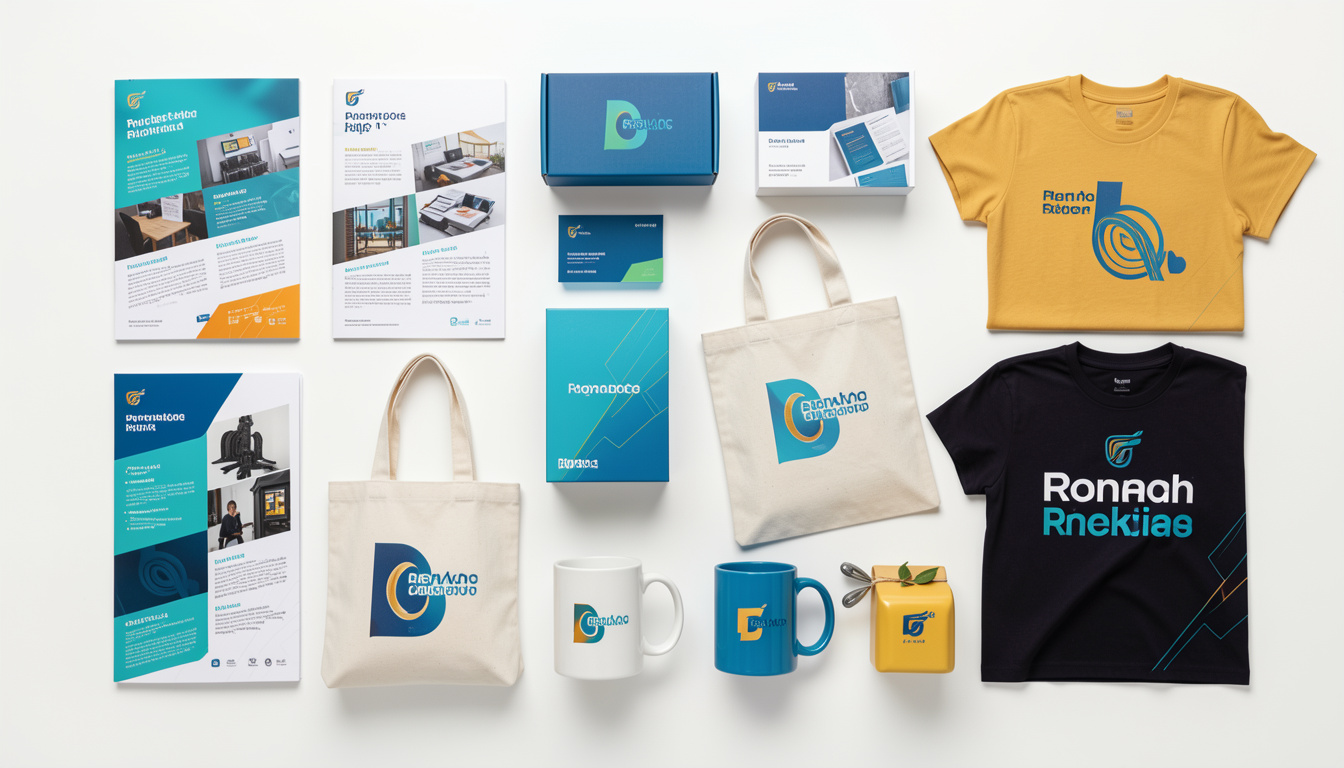
Corporate printing helps build a strong brand identity by ensuring every printed customer touchpoint consistently reflects your company’s logo, colours, typography, messaging, and overall visual identity. Consistent, high-quality printed materials strengthen brand recognition, improve credibility, build customer trust, and create a cohesive brand experience across marketing, sales, and everyday business communications.
Key Takeaways
- Corporate printing helps create a consistent brand identity across every physical customer touchpoint, from business cards and brochures to packaging, signage, and corporate stationery.
- Consistent use of logos, colours, typography, imagery, and print finishes strengthens brand recognition and improves customer trust.
- Professionally printed materials support marketing, sales, internal communications, and everyday business operations while reinforcing a cohesive visual identity.
- High-quality commercial printing, whether produced using digital printing or offset printing, helps maintain consistent colour reproduction and professional presentation.
- Brand guidelines and standardised print specifications make it easier to keep all printed materials visually consistent across different campaigns, locations, and print runs.
- Printed materials complement digital marketing by providing tangible brand experiences that customers can keep, revisit, and remember.
- Investing in consistent corporate printing helps businesses build credibility, improve brand recall, and present a more professional image in competitive markets.
Introduction
Every interaction a customer has with your business influences how they perceive your brand. These interactions, often called customer touchpoints, include everything from receiving a business card and reading a company brochure to opening product packaging, visiting your office, or attending an exhibition where your brand is displayed.
Although digital channels such as websites, social media, and email marketing play an essential role in modern business, professionally printed materials continue to create tangible experiences that digital media cannot fully replace. Business cards, corporate stationery, presentation folders, catalogues, packaging, signage, and promotional materials allow customers to physically interact with your brand, often leaving a stronger and longer-lasting impression.
Corporate printing helps ensure that every printed touchpoint consistently reflects your company’s visual identity through accurate colours, typography, logos, imagery, paper selection, and print finishes. This consistency strengthens brand recognition, reinforces professionalism, and builds customer confidence across marketing, sales, and everyday business communications.
This guide explains how corporate printing supports brand identity, which printed materials have the greatest impact on customer perception, and the production practices businesses can use to create consistent, professional brand experiences across every physical touchpoint.
What Is Brand Identity?
Brand identity is the complete visual, physical, and emotional representation of a business. It is the collection of design elements, messaging, and customer experiences that help people recognise, remember, and distinguish one company from another.
While a logo is an important part of brand identity, it is only one element of a much broader system. A strong brand identity combines consistent visual standards, communication style, and professionally produced marketing materials to create a unified experience across every customer touchpoint.
A comprehensive brand identity typically includes:
- Logo and logo usage guidelines
- Brand colours (Pantone and CMYK values for print)
- Typography and font hierarchy
- Graphic elements and iconography
- Photography and illustration style
- Brand messaging and tone of voice
- Paper stocks and material selection
- Print finishes such as lamination, Spot UV, foiling, embossing, or debossing
- Packaging design
- Corporate stationery
- Signage and exhibition graphics
- Marketing collateral and promotional materials
- Employee-facing branded materials and uniforms
When these elements are applied consistently across both printed and digital communications, customers develop stronger brand recognition and greater confidence in the business. Over time, this consistency helps create a professional identity that is easier to remember and more likely to earn customer trust.
Corporate Printing vs Brand Identity
| Brand Identity | Corporate Printing |
|---|---|
| Defines how a company looks and communicates | Applies that identity to physical materials |
| Includes logos, colours, fonts, messaging | Includes business cards, brochures, packaging, signage |
| Creates recognition and positioning | Delivers consistent customer experiences |
| Exists across digital and physical channels | Focuses on printed touchpoints |
Why Corporate Printing Matters for Branding
Corporate printing plays a strategic role in branding because it transforms everyday business materials into consistent brand experiences. Every printed item that a customer, employee, supplier, or business partner sees contributes to how your organisation is perceived.
Unlike many digital interactions that are viewed briefly before being replaced by new content, printed materials often remain in use for extended periods. A professionally printed business card may stay in a wallet for months, a presentation folder may be reused during multiple meetings, product packaging may remain in a customer’s home throughout the product’s lifecycle, and office signage may be seen every day by visitors and employees alike.
Examples of long-lasting printed touchpoints include:
- Business cards kept by prospective clients
- Company brochures and catalogues used during purchasing decisions
- Presentation folders shared during meetings
- Corporate stationery used for official correspondence
- Product packaging displayed in homes or retail environments
- Office and retail signage viewed repeatedly
- Exhibition displays used at multiple events
- Promotional products such as notebooks, calendars, or branded gifts
Because these materials remain visible long after they are distributed, they continue reinforcing your brand long after the initial interaction. Every consistent visual impression helps strengthen recognition, familiarity, and customer confidence.
The most effective businesses treat corporate printing as part of their wider brand strategy. Every printed asset should support the same visual standards, communication style, and quality expectations that customers experience across other channels.
How Printed Materials Build Brand Identity
The Psychology Behind Printed Brand Experiences
Customers often form opinions about a business before they fully understand its products or services. Physical materials create sensory experiences that influence how a brand is perceived.
Unlike digital content that is viewed through a screen, printed materials allow customers to experience details such as:
- Paper texture and thickness
- Colour accuracy
- Print clarity
- Finishing quality
- Layout organisation
- Overall presentation
These details can influence whether a business appears professional, established, premium, or trustworthy.
For example, a premium business card printed on quality stock with refined finishing creates a different impression from a basic low-quality card. Similarly, a professionally produced company profile or brochure can strengthen confidence during a sales meeting by demonstrating attention to detail.
This is particularly important in industries where trust and credibility influence buying decisions, including:
- Real estate
- Financial services
- Healthcare
- Hospitality
- Education
- Professional consulting
Corporate printing works because every physical interaction becomes an opportunity to reinforce the values and quality standards behind a brand.
How Printed Materials Build Brand Identity
1. Creates Consistent Brand Recognition
Replace everything under this heading with:
Customers are more likely to remember brands they encounter consistently across multiple interactions. Every printed item—whether it is a business card, brochure, presentation folder, product label, or exhibition banner—should immediately look like it belongs to the same business.
Consistent brand recognition depends on using the same:
- Logo versions and placement
- Corporate colours
- Typography
- Graphic elements
- Photography style
- Paper stocks
- Print finishes
When these visual elements remain consistent across all printed materials, customers begin to recognise your brand more quickly and associate it with professionalism and reliability.
2. Builds Professional Credibility
Replace the existing content with:
Printed materials often create a customer’s first physical impression of your business. The quality of paper, colour accuracy, finishing, and overall presentation can influence how professional your company appears before a conversation even begins.
Professionally printed materials communicate attention to detail, while poor-quality printing can create the opposite impression through issues such as:
- Inconsistent colours
- Blurred images
- Thin or unsuitable paper
- Misaligned trimming
- Low-resolution artwork
- Inconsistent branding
Investing in quality commercial printing demonstrates that your business values consistency, professionalism, and customer experience.
3. Reinforces Company Values
Printed materials communicate more than information—they also express your brand’s personality and values. Choices such as paper stock, finishing techniques, colour palette, and design style influence how customers perceive your business.
For example:
| Brand Personality | Printing Choices |
|---|---|
| Luxury | Premium paper, foiling, embossing, soft-touch lamination |
| Eco-conscious | Recycled or FSC-certified paper, environmentally responsible printing processes |
| Modern | Clean layouts, matte finishes, minimalist typography |
| Creative | Textured papers, specialty finishes, distinctive folding styles |
| Corporate | Professional layouts, consistent colours, premium stationery |
Rather than selecting finishes simply because they look attractive, businesses should choose materials that reinforce the values and positioning of their brand.
4. Improves Customer Trust
TCustomer trust develops through consistent experiences over time. When every printed document uses the same colours, typography, layout, and messaging, customers perceive the business as organised, reliable, and established.
Consistency should extend across materials such as:
- Letterheads
- Business cards
- Brochures
- Company profiles
- Presentation folders
- Product packaging
- Invoices
- Marketing collateral
Even small inconsistencies, such as different logo versions or colour variations, can reduce the sense of professionalism that businesses work hard to establish.
5. Makes Marketing More Effective
Corporate printing is most effective when every printed item supports a unified marketing strategy. Rather than treating each brochure, flyer, catalogue, or exhibition display as an individual project, businesses should view them as connected parts of a single brand experience.
For example, a prospective customer might first notice your exhibition stand, then collect a brochure, receive a business card during a meeting, browse your product catalogue, and later receive branded packaging after placing an order.
When every printed touchpoint shares the same visual identity, messaging, and production quality, each interaction reinforces the previous one. This creates a more memorable brand experience and helps customers recognise and trust your business throughout the buying journey.
6. Maintains Brand Consistency Across Every Print Run
One of the biggest challenges for growing businesses is ensuring that printed materials remain consistent over time, especially when different products are printed at different times or in varying quantities.
Professional commercial printers help maintain consistency by using approved brand guidelines, colour management processes, calibrated printing equipment, and standard production specifications. This helps ensure that business cards ordered today closely match brochures, presentation folders, packaging, or exhibition graphics printed months later.
Important production practices include:
- Using approved Pantone or CMYK colour values
- Printing from consistent artwork files
- Maintaining colour calibration across presses
- Choosing the same paper stocks where appropriate
- Applying consistent finishing techniques
- Reviewing proofs before production
These production standards help businesses present a reliable and recognisable brand regardless of when or how often materials are reprinted.
Essential Corporate Printing Materials for Branding
| Printed Material | Branding Purpose |
|---|---|
| Business Cards | First impressions |
| Letterheads | Professional communication |
| Envelopes | Brand consistency |
| Presentation Folders | Corporate image |
| Company Profiles | Business credibility |
| Brochures | Marketing communication |
| Catalogues | Product presentation |
| Flyers | Promotions |
| Office Signage | Workplace branding |
| Exhibition Displays | Event visibility |
| Roll-Up Banners | Marketing |
| Packaging | Product recognition |
| Stickers & Labels | Brand reinforcement |
| Employee ID Cards | Internal branding |
| Corporate Gifts | Customer retention |
| Notebooks | Daily brand exposure |
| Calendars | Long-term visibility |
How Each Printed Material Supports Your Brand
Different printed materials serve different purposes throughout the customer journey. Together, they create a consistent brand experience across marketing, sales, operations, and customer service.
Business Cards
Business cards are often the first physical interaction someone has with your company. A professionally printed card with consistent branding, premium paper, and high-quality finishing helps create a positive first impression and makes your business easier to remember.
Corporate Stationery
Letterheads, envelopes, compliment slips, and other corporate stationery reinforce professionalism in everyday business communication. Consistent branding across official documents helps build credibility with clients, suppliers, and stakeholders.
Brochures, Company Profiles, and Catalogues
These materials provide detailed information about your products, services, and business while reinforcing your visual identity. High-quality printing, accurate colour reproduction, and professional layouts make marketing materials more engaging and easier to trust.
Packaging and Labels
Packaging is often the last stage of the customer journey but one of the most memorable. Consistent packaging design, labels, and branded inserts help reinforce brand recognition every time a customer receives or uses your product.
Signage and Exhibition Displays
Office signage, retail graphics, exhibition stands, roll-up banners, and large-format displays increase brand visibility in physical environments. Consistent branding across these materials strengthens recognition during events, meetings, and customer visits.
Promotional Products
Branded notebooks, calendars, corporate gifts, and promotional merchandise keep your brand visible long after an event or marketing campaign has ended, providing repeated exposure that supports long-term brand recall.
Why Print Still Matters in a Digital World
While digital marketing enables businesses to reach audiences quickly and at scale, printed materials provide tangible experiences that digital channels cannot fully replicate. Rather than competing with digital marketing, corporate printing complements it by reinforcing brand recognition across physical customer touchpoints. Businesses that integrate both print and digital often create a more consistent and memorable customer experience.
| Printed Materials | Digital Media |
|---|---|
| Create a tangible, physical brand experience | Deliver instant online communication |
| Often retained for weeks, months, or years | Usually viewed for a shorter period |
| Support face-to-face meetings, events, and direct interactions | Reach large audiences quickly across multiple channels |
| Reinforce professionalism through paper quality, finishing, and presentation | Enable rapid updates, personalization, and audience targeting |
| Help strengthen brand recall through repeated physical exposure | Drive immediate engagement and measurable campaign performance |
| Work best alongside digital marketing as part of an integrated brand strategy | Most effective when supported by consistent offline branding |
The strongest brands combine digital and physical experiences. A customer may discover a company online before interacting with a brochure, visiting a showroom, attending an exhibition, or receiving branded packaging. When both digital and printed materials follow the same identity standards, each interaction strengthens the overall brand experience.
UAE Business Example
UAE Business Example: How Corporate Printing Shapes Brand Perception
Consider two companies exhibiting at a major business event in Dubai.
Both companies offer similar services, but their printed brand materials create very different first impressions.
Company A presents:
- Basic business cards with inconsistent colours
- Generic flyers printed on lightweight paper
- Different logo variations across materials
- Brochures with mismatched layouts
- Low-quality exhibition graphics
Company B presents:
- Professionally printed business cards using consistent brand colours
- Premium brochures and company profiles
- Matching exhibition displays and large-format graphics
- Branded presentation folders for client meetings
- Consistent corporate stationery and promotional materials
Before a sales conversation begins, visitors often form perceptions based on visual presentation. Company B’s consistent printed materials communicate organisation, attention to detail, and professionalism.
In the UAE market, corporate printing plays an especially important role because many business relationships are built through face-to-face interactions, networking events, exhibitions, and client presentations.
Major business environments such as trade exhibitions, corporate events, property showcases, hospitality meetings, and B2B networking sessions rely heavily on physical brand materials to create professional first impressions.
A well-produced company profile, presentation folder, brochure, or exhibition display can help businesses communicate credibility quickly when customers are comparing multiple suppliers or service providers in a competitive marketplace.
This is especially important in competitive UAE sectors such as real estate, hospitality, finance, healthcare, education, retail, and professional services, where businesses frequently rely on face-to-face meetings, exhibitions, networking events, and customer presentations.
For UAE businesses, corporate printing is not simply about producing attractive materials—it is about creating consistent physical brand experiences that support trust, recognition, and long-term customer relationships.
Common Branding Mistakes in Corporate Printing
Common Branding Mistakes in Corporate Printing
Many businesses invest time creating a strong brand identity but unintentionally weaken it during the printing process. Small inconsistencies in artwork, materials, colour management, or production choices can affect how professional and reliable a company appears.
1. Using Different Logo Versions
Using outdated logos or different logo variations across business cards, brochures, packaging, and signage creates confusion and reduces brand recognition.
Solution: Maintain approved logo files and clear brand guidelines that define where and how logos should be used.
2. Ignoring Colour Consistency
Colours that appear correct on a screen may look different when printed because digital displays use RGB colour, while commercial printing commonly uses CMYK colour processes.
Solution: Use approved CMYK or Pantone colour values and work with a printing partner that follows proper colour management procedures.
3. Using Low-Resolution Images and Incorrect Artwork
Low-quality images, incorrect file formats, and unsuitable artwork settings can result in blurry printing, poor detail reproduction, or unexpected production issues.
Solution: Prepare professional print-ready artwork with appropriate resolution, correct colour settings, proper bleed, and suitable file formats such as PDF/X when required.
4. Choosing Materials That Do Not Match the Brand Positioning
Paper selection and finishing techniques influence how customers perceive a brand. Using low-quality materials for a premium business or unsuitable finishes for a specific application can create the wrong impression.
Solution: Select paper stocks and finishes based on the purpose of the material, such as:
- Matte lamination for a professional and understated appearance
- Soft-touch lamination for premium applications
- Spot UV for highlighting important design elements
- Foiling or embossing for luxury branding
5. Changing Designs Too Frequently
Frequent redesigns can make a brand harder to recognise because customers do not have enough time to associate consistent visual elements with the business.
Solution: Update materials when there is a genuine reason, such as a rebrand, business expansion, or significant change in services.
6. Printing From Uncontrolled Artwork Files
Using different artwork versions across departments or locations can result in inconsistent brochures, stationery, packaging, and marketing materials.
Solution: Keep approved master artwork files and ensure all print suppliers use the latest versions.
7. Selecting a Printing Supplier Based Only on Price
Choosing the lowest-cost option may result in inconsistent colours, unsuitable materials, limited finishing options, or quality issues that affect customer perception.
Solution: Evaluate printing partners based on production quality, colour accuracy, material knowledge, reliability, and ability to maintain brand standards.
Consistency is often more valuable than frequent redesigns. A recognisable brand is built through repeated exposure to the same visual identity, materials, colours, and quality standards across every customer interaction.
Professional Tips for Strong Corporate Branding Through Printing
Creating a consistent printed brand experience requires more than simply placing a logo on marketing materials. Businesses should consider design standards, material choices, production quality, and long-term consistency before starting any print project.
1. Create Brand Guidelines Before Printing
A clear set of brand guidelines ensures that everyone involved in creating printed materials follows the same standards.
Brand guidelines should define:
- Approved logo versions
- Logo placement rules
- Brand colours using CMYK, Pantone, and RGB references
- Typography standards
- Image style
- Print finish preferences
- Stationery and marketing templates
This prevents inconsistent designs across different departments, campaigns, or suppliers.
2. Define Print Specifications Before Production
Before sending artwork to a printing company, businesses should establish clear production requirements.
Important specifications include:
- Required paper type and GSM
- Printing method (digital printing or offset printing)
- Colour requirements
- Finishing options
- Quantity requirements
- Delivery deadlines
- Artwork format requirements
Clear specifications help reduce errors and ensure the final product matches the intended brand appearance.
3. Select Materials That Match Your Brand Positioning
Paper and finishing choices influence how customers perceive your business.
For example:
- Premium brands may benefit from thicker stocks, soft-touch lamination, foiling, or embossing.
- Eco-conscious brands may prefer recycled or FSC-certified papers.
- Professional service companies may choose clean layouts with refined finishes.
- Retail brands may prioritise vibrant colours and durable packaging materials.
The right material choice supports the message your brand wants to communicate.
4. Maintain Colour Accuracy Across Different Materials
Colours can vary between screens, printing methods, paper types, and production equipment.
To maintain consistency:
- Use approved CMYK or Pantone colour references
- Request printed proofs for important projects
- Work with printers that use proper colour management
- Avoid relying only on screen previews
Colour accuracy is especially important for businesses where brand recognition depends heavily on specific corporate colours.
5. Review Proofs Before Large Print Runs
Printed proofs allow businesses to check:
- Colour appearance
- Image quality
- Text accuracy
- Layout alignment
- Finishing results
- Overall brand presentation
Reviewing proofs before mass production can prevent costly reprints and ensure the final materials meet expectations.
6. Standardise Artwork and Reordering Processes
As businesses grow, printed materials are often produced by different teams or at different times.
Maintaining:
- Approved artwork files
- Production specifications
- Supplier records
- Brand templates
helps ensure that future print runs remain consistent with previous materials.
7. Choose a Printing Partner Based on Expertise, Not Only Price
A professional printing partner contributes more than production capacity. They provide guidance on materials, colour reproduction, finishing techniques, and practical solutions based on the intended application.
The right printing partner helps businesses protect their brand identity by maintaining quality and consistency across every printed asset.
Choosing the Right Corporate Printing Approach for Your Business
Different businesses have different branding goals, customer journeys, and printing requirements. The right corporate printing approach depends on what the business wants to achieve, who will interact with the materials, and how often they need to be produced.
| Business Need | Recommended Printing Focus |
|---|---|
| New business launch | Complete corporate stationery package including business cards, letterheads, envelopes, and presentation materials |
| Premium brand positioning | High-quality paper stocks, luxury finishes, embossing, foiling, and refined presentation materials |
| Exhibition or trade event presence | Large-format displays, roll-up banners, brochures, company profiles, and promotional materials |
| Retail brand visibility | Packaging, product labels, stickers, and branded customer materials |
| Corporate communication | Letterheads, envelopes, presentation folders, reports, and professional stationery |
| Frequent marketing campaigns | Digital printing for flexible quantities, faster turnaround, and campaign updates |
| Large-volume production | Offset printing for efficient production and consistent results at higher quantities |
Before starting a printing project, businesses should consider:
- Who will use or see the printed material?
- What impression should the material create?
- How frequently will it be produced?
- What level of durability or finish is required?
- Does the material need to match existing brand standards?
A strategic approach ensures that printing decisions support business objectives rather than simply producing attractive materials.
Frequently Asked Questions About Corporate Printing and Brand Identity
1. Does corporate printing still matter if my business is mostly online?
Yes. Even businesses that operate primarily online benefit from professional printed materials because customers still interact with physical brand touchpoints such as business cards, packaging, invoices, event materials, office signage, and corporate stationery.
Printed materials create tangible brand experiences that complement digital channels by reinforcing the same colours, messaging, and visual identity customers see online.
2. How does corporate printing help build brand identity?
Corporate printing strengthens brand identity by ensuring every physical customer touchpoint consistently represents the business. When materials such as brochures, business cards, packaging, and signage use the same logo, colours, typography, and design standards, customers develop stronger brand recognition and greater trust.
3. Which printed materials have the biggest impact on branding?
The most influential printed materials are usually those customers interact with during important business moments. Business cards create first impressions during meetings and networking, company profiles and brochures support sales conversations, packaging shapes the customer experience after purchase, and exhibition graphics help businesses stand out during events.
The most effective materials depend on the industry, customer journey, and business objectives.
4. Can professional printing improve customer trust?
Yes. Professional printing can improve perceived credibility by demonstrating attention to detail, consistency, and quality. Customers often associate accurate colours, suitable paper choices, clean finishing, and professional presentation with a well-managed business.
5. Why is colour consistency important in corporate printing?
Colour consistency helps customers recognise a brand across different printed materials and digital channels. Since printed materials commonly use CMYK colour processes while digital screens use RGB, colours can appear different if artwork preparation and production standards are not properly managed.
Businesses often use approved CMYK values, Pantone references, and professional colour management procedures to maintain consistent brand colours.
6. Does paper quality affect brand perception?
Yes. Paper selection influences how customers physically experience a brand. A premium business card printed on thick paper stock with refined finishing creates a different impression compared with a lightweight standard card.
Factors such as paper GSM, texture, coating, and finishing options should be selected according to the purpose of the material and the desired brand positioning.
7. What printing method is best for corporate branding?
The best printing method depends on the project requirements. Digital printing is often suitable for shorter print runs, personalised materials, and projects requiring faster production. Offset printing is commonly preferred for larger quantities where consistent colour reproduction and production efficiency are important.
The right choice depends on factors such as quantity, timeline, budget, colour requirements, paper selection, and finishing requirements.
8. How can businesses maintain consistent branding across different print materials?
Businesses can maintain consistency by creating clear brand guidelines, using approved artwork files, standardising colour references, and working with experienced printing partners.
Maintaining consistency requires control over important elements such as logo usage, typography, colours, paper specifications, finishing choices, and approved design templates.
9. Why should businesses request printed proofs before production?
Printed proofs allow businesses to review the actual appearance of a project before committing to full production. They help identify potential issues with colour accuracy, image quality, text accuracy, layout alignment, and finishing results.
Proofing is especially valuable for important projects such as packaging, company profiles, brochures, and exhibition graphics where production errors can be costly.
10. Can sustainable printing support brand identity?
Yes. Sustainable printing choices can support brand identity when they reflect genuine environmental commitments. Businesses may choose options such as recycled paper stocks, FSC-certified papers, responsible material selection, and reduced unnecessary packaging.
Sustainability should be communicated accurately and supported by responsible business practices.
11. What is the biggest branding mistake businesses make with printed materials?
The biggest branding mistake is inconsistency. Using different logo versions, colours, fonts, paper qualities, or design styles across printed materials can weaken brand recognition and reduce customer confidence.
A strong brand is built through repeated exposure to the same visual identity and quality standards across every customer interaction.
12. How often should businesses update their printed branding materials?
Businesses should update printed materials when there is a meaningful reason, such as a rebrand, change in services, updated company information, or a significant change in brand guidelines.
Frequent unnecessary redesigns can reduce recognition because customers have less time to associate consistent visual elements with the business.
13. Should printed materials match a company’s website and digital branding?
Yes. Printed and digital materials should create one consistent brand experience. Customers should see the same colours, logo usage, typography, photography style, and messaging across websites, social media, email marketing, brochures, packaging, and corporate stationery.
A consistent brand presence across both digital and physical channels strengthens recognition and builds customer confidence.
14. What is the difference between corporate printing and commercial printing?
Corporate printing focuses specifically on producing branded business materials that represent a company’s identity, such as business cards, letterheads, brochures, company profiles, packaging, presentation folders, signage, and promotional materials.
Commercial printing is a broader term that includes any professional printing produced for businesses, organisations, and individuals. It can include corporate printing as well as other applications such as books, magazines, posters, retail materials, and general marketing products.
In simple terms, corporate printing is a specialised category of commercial printing focused on maintaining brand consistency, professionalism, and customer-facing business communication.
Final Expert Insight
A strong brand is not created through a single advertisement or marketing campaign. It is built through repeated, consistent experiences across every interaction a customer has with a business.
Corporate printing helps transform brand guidelines into real-world experiences by applying the same visual standards across business cards, stationery, brochures, packaging, signage, and other customer-facing materials.
Successful businesses understand that effective printing involves more than attractive design. Colour accuracy, suitable materials, professional finishing, print quality, and production consistency all influence how customers perceive the brand.
When visual identity and print execution work together, printed materials become more than communication tools. They become long-term brand assets that help businesses build recognition, credibility, and customer trust over time.
Soft Call-to-Action
Whether you are launching a new business, updating your corporate identity, or improving consistency across your existing marketing materials, professionally produced print assets can help strengthen your brand experience.
A reliable commercial printing partner can support businesses with everything from business cards, corporate stationery, brochures, company profiles, packaging, and promotional materials to large-format printing and exhibition graphics.
The right printing approach ensures that every physical interaction with your brand reflects the quality, professionalism, and consistency your business aims to communicate.