د.إ0.00

The Ultimate Guide to Corporate Stationery Printing
Quick Answer
Corporate stationery printing is the production of professionally branded business materials such as business cards, letterheads, envelopes, presentation folders, notepads, NCR forms, and corporate notebooks. Businesses use these printed materials to maintain brand consistency, support official communication, and create professional customer experiences. The final quality depends on selecting the right paper GSM, printing method, colour management, finishing options, and print-ready artwork based on the purpose of each stationery item.
Key Takeaways
- Corporate stationery printing combines branding, functionality, and production quality to create professional materials used for communication, documentation, customer interaction, and daily business operations.
- A complete corporate stationery system may include business cards, letterheads, envelopes, presentation folders, notepads, compliment slips, corporate notebooks, NCR forms, labels, and branded stamps.
- Effective corporate stationery combines three elements: consistent branding, suitable materials, and professional printing quality.
- Paper selection depends on the purpose of each item. For example, letterheads require writable paper, while business cards benefit from thicker premium cardstock.
- Printing methods such as digital printing and offset printing should be selected based on quantity, turnaround time, colour requirements, and budget.
- Finishing options including lamination, Spot UV, foil stamping, embossing, and debossing can enhance premium stationery items when used strategically.
- Print-ready artwork is essential. Businesses should prepare files using CMYK colour mode, 300 DPI images, vector logos, correct bleed, and suitable PDF formats.
- Corporate stationery should follow brand guidelines to maintain consistency across logos, colours, typography, layouts, and communication materials.
- UAE businesses often rely on professional stationery for client meetings, government documentation, corporate proposals, contracts, and formal correspondence.
- The best stationery solutions balance brand impact, functionality, durability, sustainability, and production cost.
Introduction
Corporate stationery printing helps businesses create professionally branded materials for everyday communication, documentation, and customer interactions. From business cards and letterheads to presentation folders and branded notebooks, these printed assets support a consistent brand identity across meetings, proposals, contracts, and official correspondence.
Professional stationery requires more than placing a logo on paper. The choice of paper GSM, printing technology, colour accuracy, finishing techniques, and artwork preparation all influence the final result. A well-planned stationery system balances appearance, functionality, durability, and production efficiency.
In the UAE business environment, professionally printed stationery remains important for companies dealing with clients, government entities, suppliers, investors, and corporate partners. Industries such as real estate, construction, finance, hospitality, healthcare, and professional services frequently rely on branded documents, presentation materials, and official stationery to maintain credibility.
This guide explains everything businesses need to know about corporate stationery printing, including essential stationery items, design best practices, paper selection, printing techniques, branding consistency, common mistakes, and how to choose the right printing solutions for long-term business success.
What Is Corporate Stationery Printing?
Corporate stationery printing is the production of professionally branded printed materials that businesses use for official communication, administration, marketing, and day-to-day operations. These materials are designed using a company’s visual identity—including its logo, colours, typography, and brand elements—to create a consistent and recognisable image across every customer and business interaction.
Unlike general office supplies, corporate stationery is customised specifically for your organisation. Every item serves a practical purpose while also reinforcing your brand whenever it is used internally or shared with clients, suppliers, partners, or government authorities.
The production process typically involves several stages: reviewing brand requirements, preparing print-ready artwork, selecting suitable paper and materials, choosing the correct printing method, applying finishing options where required, producing a proof sample, completing quality checks, and delivering the final stationery. Each stage affects colour accuracy, durability, appearance, and overall production quality.
Whether it’s a business card exchanged during a networking event, a quotation printed on a branded letterhead, or a proposal presented in a customised folder, each piece of stationery contributes to how people perceive your business.
Why Corporate Stationery Still Matters
Many business processes have become digital, but printed stationery continues to play an important role in establishing professionalism and trust. Beyond branding, corporate stationery also supports practical business processes by providing consistent formats for official communication, documentation, approvals, client presentations, and internal workflows.
Corporate stationery helps businesses:
- Present a consistent and professional brand image.
- Build credibility during meetings and client interactions.
- Improve brand recognition through repeated visual exposure.
- Support formal business documentation and official correspondence.
- Create memorable first impressions.
- Differentiate the company from competitors using premium finishes and quality materials.
- Reinforce brand standards across departments and locations.
For industries such as legal services, finance, healthcare, education, construction, real estate, hospitality, and government contracting, professionally printed stationery often remains an expected part of doing business.
Corporate Stationery vs Office Stationery
Although the terms are sometimes used interchangeably, they refer to different things.
| Corporate Stationery | Office Stationery |
|---|---|
| Custom branded with company identity | Generic office supplies |
| Supports branding and professional communication | Supports everyday office tasks |
| Designed according to brand guidelines | Usually purchased off the shelf |
| Used externally and internally | Primarily used internally |
| Reflects company image | Focuses on functionality rather than branding |
| Customer-facing teams, management, sales teams, official business communication | General employees for internal daily office tasks |
For example, a plain notebook purchased from an office supply store is office stationery, while a customised notebook printed with your company’s logo, brand colours, and contact information is corporate stationery.
The Role of Corporate Stationery in Brand Identity
Every printed touchpoint contributes to your brand experience. Customers often judge a company’s professionalism by the quality and consistency of its communication materials.
Imagine receiving:
- A quotation on a professionally printed letterhead.
- A premium business card with a tactile finish.
- A branded presentation folder containing neatly organised documents.
- A personalised compliment slip accompanying a delivery.
These details may seem small individually, but together they create a strong impression of reliability, organisation, and quality.
On the other hand, inconsistent branding, low-quality printing, mismatched colours, or poorly designed stationery can undermine confidence and make even an established business appear less professional.
For growing organisations, corporate stationery also provides a controlled system for applying brand guidelines consistently across departments, locations, and employees, ensuring every customer interaction follows the same visual identity.
Corporate stationery acts as a silent ambassador for your brand, ensuring that every printed interaction reflects the same level of professionalism, regardless of who in the organisation is communicating with the client.
Essential Corporate Stationery Items Every Business Should Have
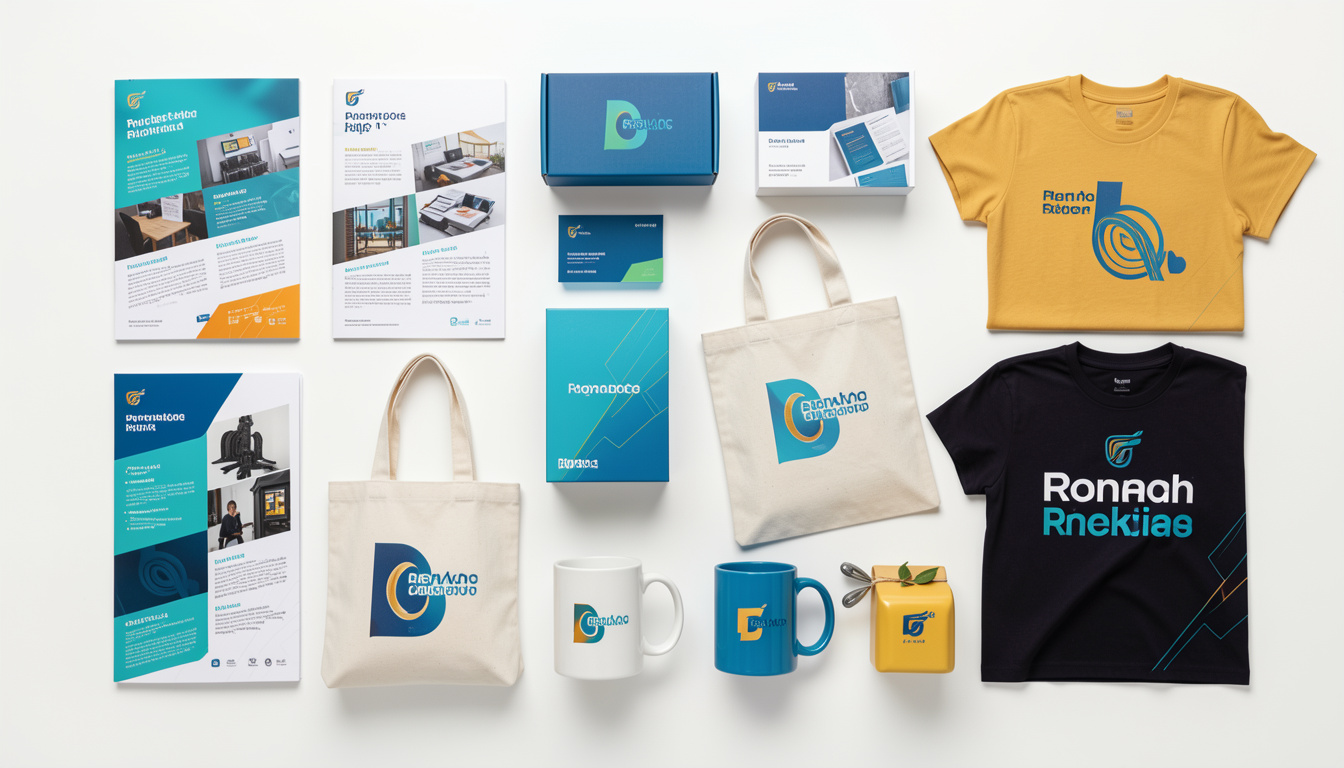
A well-designed corporate stationery suite ensures your business presents a consistent and professional image across every interaction. While the exact requirements vary by industry and company size, most organisations benefit from a core set of branded materials that support sales, administration, customer service, and daily operations.
Rather than creating each item independently, businesses should view corporate stationery as a complete brand system where every piece follows the same visual identity, typography, colours, and design standards.
The ideal corporate stationery package depends on the size, industry, and communication needs of the business. Startups may begin with essential items such as business cards, letterheads, and envelopes, while established companies may require complete stationery systems including presentation folders, NCR forms, corporate notebooks, and branded packaging materials.
Business Cards
Business cards remain one of the most effective networking tools despite the rise of digital communication. They provide a quick and professional way to exchange contact information while leaving a lasting impression.
A professionally printed business card should include:
- Company logo
- Employee name and designation
- Contact details
- Company website
- QR code (optional)
- Consistent brand colours and typography
The layout should also maintain sufficient space for readability, with standard business card dimensions and clear hierarchy between the name, designation, contact details, and branding elements. Premium finishes such as soft-touch lamination, spot UV, embossing, foil stamping, or thick cardstock can further enhance the perceived quality of your brand.
Letterheads
A branded letterhead is used for official correspondence, quotations, contracts, invoices, certificates, and business letters.
Professional letterheads typically include:
- Company logo
- Registered business name
- Address
- Contact information
- Website
- Corporate branding elements
For businesses that use letterheads with office printers, the paper stock should also be selected carefully to ensure smooth printing performance, good ink absorption, and compatibility with common office printing systems. Letterheads are particularly important when communicating with government departments, financial institutions, corporate clients, and legal entities where official documentation carries significant weight.
Envelopes
Branded envelopes extend your corporate identity beyond the documents inside. They help recipients instantly recognise your company while reinforcing professionalism.
Common envelope formats include:
- DL envelopes
- C4 document envelopes
- C5 envelopes
- Window envelopes
- Courier envelopes
Businesses often print their logo, return address, website, and corporate colours while maintaining a clean, uncluttered design. For business mail and document delivery, envelope design should also consider postal requirements, document size, opening method, and print durability to ensure the stationery remains practical during handling and transportation.
Presentation Folders
Presentation folders organise proposals, contracts, brochures, reports, and marketing materials into a polished package for meetings and client presentations.
They are commonly used by:
- Real estate companies
- Law firms
- Financial institutions
- Educational organisations
- Healthcare providers
- Corporate sales teams
Custom folders can include business card slots, document pockets, and branded interior printing for a premium presentation. A well-designed presentation folder should also support document organisation by creating clear sections for proposals, contracts, brochures, certificates, and supporting materials while protecting the contents during meetings and client handling.
Notepads
Branded notepads provide everyday utility while subtly reinforcing your brand. They are frequently used during meetings, training sessions, conferences, and client visits.
Businesses often distribute customised notepads as part of onboarding packs, promotional campaigns, or corporate gifts, ensuring their branding remains visible long after the initial interaction. The inner paper selection is also important, as smooth writing surfaces, appropriate paper weight, and ink compatibility directly affect the user experience.
Compliment Slips
Compliment slips add a personal touch to business communication. They are typically enclosed with deliveries, samples, invoices, gifts, or important documents.
A short handwritten message on a branded compliment slip can strengthen customer relationships and make routine interactions feel more thoughtful and professional. Because compliment slips are often handwritten, businesses should select paper stocks that provide a premium feel while allowing smooth writing without ink smudging or poor absorption.
Corporate Notebooks
Branded notebooks are popular for employee use, executive meetings, conferences, seminars, and corporate gifting.
High-quality notebooks featuring durable covers, premium paper, and customised branding help position your company as organised and detail-oriented while providing practical value to recipients. Notebook quality depends on several production factors, including cover material, binding method, paper thickness, page count, printing technique, and whether the design requires additional features such as elastic bands, bookmarks, or custom inserts.
Rubber Stamps and Self-Inking Stamps
Many businesses continue to use customised stamps for administrative processes, including:
- Approved
- Paid
- Received
- Confidential
- Company seal
- Signature stamps
- Date stamps
Although simple, branded stamps improve workflow efficiency and support consistent documentation. Self-inking stamps are commonly preferred for frequent daily use because they are faster, cleaner, and easier to handle, while traditional rubber stamps may be suitable for occasional administrative requirements or larger custom designs.
Invoice Books, Receipt Books, and NCR Forms
Businesses that require handwritten records often use customised multi-part forms for invoices, delivery notes, purchase orders, and receipts. NCR (No Carbon Required) forms are multi-part printed documents that transfer handwritten information onto duplicate or triplicate copies without using carbon paper, making them useful for invoices, delivery notes, receipts, and service records.
Custom printing ensures these documents include:
- Company branding
- Sequential numbering
- Contact information
- Tax details
- Terms and conditions
- Carbonless duplicate or triplicate copies
These forms are especially valuable for logistics, maintenance, retail, construction, and field service businesses.
Corporate Labels and Stickers
Printed labels and stickers support both operational efficiency and branding. They can be used for:
- Product packaging
- Asset management
- Shipping labels
- Warranty seals
- Promotional stickers
- Return address labels
Consistent branding across labels helps create a more cohesive customer experience from packaging to delivery. Label selection should consider factors such as application surface, indoor or outdoor use, adhesive strength, material type, durability requirements, and whether the labels need resistance against moisture, handling, or temperature changes.
Corporate Stationery Checklist
While every business has unique requirements, a complete corporate stationery package typically includes:
| Stationery Item | Primary Purpose |
|---|---|
| Business Cards | Professional networking and contact sharing |
| Letterheads | Official correspondence and documentation |
| Envelopes | Branded document delivery |
| Presentation Folders | Organising proposals and presentations |
| Notepads | Meetings, notes, and promotions |
| Compliment Slips | Personalised customer communication |
| Corporate Notebooks | Employee use and corporate gifts |
| Rubber Stamps | Administrative workflows |
| NCR Forms | Invoices, receipts, and delivery notes |
| Labels & Stickers | Packaging, identification, and branding |
Businesses do not always need every stationery item immediately. The priority order usually depends on business type, customer interaction frequency, and operational requirements. Most companies begin with essential items such as business cards, letterheads, and envelopes before expanding into folders, notebooks, NCR forms, and branded promotional materials.
Benefits of Professional Corporate Stationery Printing
Professional corporate stationery creates measurable value by improving communication consistency, supporting business operations, protecting brand standards, and enhancing the experience customers have with your company.
Professionally printed stationery is not simply an operational necessity—it is an investment in your brand, reputation, and customer experience.
Creates a Strong First Impression
First impressions are formed quickly, and printed materials often shape those perceptions before any conversation begins.
The physical characteristics of printed materials—such as paper weight, colour accuracy, finishing quality, and print consistency—directly influence how customers perceive the professionalism and reliability of a business.
In contrast, poorly printed stationery, inconsistent branding, or low-quality paper can make even an experienced company appear unprofessional. Common production issues such as incorrect colours, weak paper stock, poor alignment, or damaged finishes can reduce the perceived quality of otherwise strong branding.
Strengthens Brand Recognition
Successful brands maintain consistency across every customer touchpoint.
Repeated exposure to consistent printed elements—such as logos, colours, typography, layouts, and visual styles—helps customers associate physical materials with your business over time. Each business card, document, folder, or branded package becomes another opportunity to reinforce recognition.
This consistency builds familiarity over time, making your company appear more established and trustworthy. For businesses operating across multiple teams or locations, maintaining the same stationery standards ensures customers receive a consistent brand experience regardless of who they interact with.
Builds Trust and Credibility
Professionally produced stationery supports trust by demonstrating attention to detail in every formal interaction. Accurate information, consistent branding, quality materials, and reliable print production help businesses present themselves as organised and dependable.
Clients are more likely to trust organisations that present polished proposals, branded documents, and professionally printed communication rather than generic or inconsistent materials.
This is especially important for industries where professionalism influences purchasing decisions, including:
- Legal services
- Financial institutions
- Healthcare providers
- Construction companies
- Engineering firms
- Government contractors
- Corporate consulting
- Real estate agencies
In these sectors, printed materials often support important decisions, contracts, approvals, and client relationships, making presentation quality an important part of professional communication.
Reinforces Your Brand Identity
Corporate stationery translates your brand guidelines into physical materials. The accuracy of logo reproduction, colour matching, typography, spacing, and print quality determines whether customers experience a consistent version of your brand in the physical environment.
Every document should reflect the same identity through:
- Logo placement
- Corporate colours
- Typography
- Layout style
- Graphic elements
- Messaging tone
Maintaining these standards helps customers associate every communication with your company, regardless of which department or employee they interact with. For organisations with frequent printing requirements, maintaining approved artwork files and production specifications helps ensure consistency across repeat orders.
Supports Professional Business Communication
Official documents carry greater authority when presented on professionally branded stationery.
Examples include:
- Quotations
- Contracts
- Proposals
- Invoices
- Certificates
- Purchase orders
- Company announcements
- Welcome letters
Using branded stationery demonstrates that these documents originate from a legitimate, organised business. Businesses should also ensure that printed documents contain accurate company information and required details, as errors in official stationery can create confusion, delay approvals, or require costly reprints.
Enhances Customer Experience
Customers notice the details.
Receiving documents in a branded presentation folder, accompanied by a personalised compliment slip and premium business card, creates a more memorable experience than receiving loose papers in a plain envelope.
These small touches contribute to a more positive perception of your company and can influence long-term customer relationships.
Differentiates Your Business from Competitors
In competitive markets, branding helps businesses stand out.
Premium paper stocks, elegant finishes, and cohesive stationery design can distinguish your business from competitors that rely on generic office supplies or inconsistent branding.
While products and services may be similar, the professionalism of your presentation often becomes a deciding factor.
Improves Internal Brand Consistency
Corporate stationery is not only for customers—it also helps employees represent the business consistently.
When every department uses the same branded templates and printed materials, it creates a unified corporate identity across the organisation.
This consistency becomes particularly valuable for businesses with:
- Multiple offices
- Franchise locations
- Regional branches
- Large sales teams
- Client-facing departments
Supports Long-Term Marketing
Unlike many forms of advertising, corporate stationery continues to promote your brand long after it has been distributed.
A business card may remain in a client’s wallet for months, a branded notebook may be used daily, and a presentation folder may stay on a customer’s desk throughout a project.
Each use reinforces brand awareness without additional marketing spend.
Delivers Better Value Over Time
Although professionally printed stationery may have a higher upfront cost than generic alternatives, it often provides better long-term value.
High-quality materials are more durable, produce better print results, and reduce the need for frequent reprints. More importantly, they help protect your brand image by ensuring every interaction reflects the standards your business wants to convey.
Summary: Why Invest in Professional Corporate Stationery?
| Business Benefit | How It Adds Value |
|---|---|
| Professional first impressions | Builds confidence from the first interaction |
| Consistent branding | Increases recognition and strengthens identity |
| Greater credibility | Reinforces trust with clients and partners |
| Improved communication | Makes official documents look more professional |
| Better customer experience | Creates memorable and polished interactions |
| Competitive differentiation | Helps your business stand out in crowded markets |
| Internal consistency | Aligns departments under one brand identity |
| Long-term marketing value | Keeps your brand visible through everyday use |
| Better return on investment | Combines practical functionality with ongoing brand exposure |
Professional corporate stationery is more than a collection of printed materials—it is a strategic branding asset. When every item reflects your company’s identity with consistent design, quality printing, and premium materials, it reinforces professionalism and helps build stronger relationships with clients, partners, and stakeholders at every stage of the business journey.
How to Design Effective Corporate Stationery
Well-designed corporate stationery does more than display your logo—it creates a cohesive brand experience that communicates professionalism, consistency, and attention to detail. Every stationery item should be instantly recognisable as part of your business while remaining functional and easy to use.
An effective design balances branding with practicality, ensuring documents are visually appealing without becoming cluttered or difficult to read.
Start with Your Brand Guidelines
Before designing any stationery, establish a clear set of brand guidelines that define how your visual identity should be applied.
These guidelines typically include:
- Logo variations and usage rules
- Brand colour palette
- Primary and secondary fonts
- Typography hierarchy
- Icon and graphic styles
- Image treatment
- White space requirements
- Tone of visual communication
Using the same guidelines across every stationery item creates a consistent and professional appearance.
Keep the Design Clean and Professional
Corporate stationery should prioritise clarity over decoration.
A clean layout with appropriate spacing allows important information to stand out while giving the design a polished, modern appearance.
Avoid overcrowding pages with excessive graphics, multiple fonts, or unnecessary decorative elements. Simplicity often creates a stronger impression than complexity.
Maintain Consistent Logo Placement
Your company logo is the most recognisable element of your brand, so its placement should remain consistent across all stationery.
For example:
- Business cards may feature the logo prominently on the front.
- Letterheads often position the logo at the top of the page.
- Envelopes usually place the logo in the upper-left corner.
- Presentation folders may centre the logo on the cover.
Consistent positioning helps reinforce brand recognition and creates visual harmony across your stationery suite.
Choose Readable Typography
Typography plays a major role in both aesthetics and usability.
Select professional fonts that are easy to read in both print and digital formats. Limit your stationery to two or three complementary typefaces to maintain consistency and avoid visual clutter.
Ensure font sizes are appropriate for each application, particularly for contact details, addresses, and legal information.
Use Brand Colours Strategically
Your corporate colours should support your brand identity without overwhelming the design.
Consider using:
- Primary colours for headings or key brand elements.
- Secondary colours for accents or dividers.
- Neutral colours to improve readability and balance.
Consistent colour reproduction is especially important in commercial printing, making accurate colour management and CMYK artwork essential.
Leave Plenty of White Space
White space is an important design element, not wasted space.
Generous margins and balanced spacing improve readability, create a premium appearance, and make documents easier to navigate.
For letterheads and forms, sufficient blank space also ensures there is room for written or printed content without compromising the design.
Prioritise Functionality
Each stationery item should be designed with its intended purpose in mind.
For example:
- Letterheads should provide ample space for business correspondence.
- Business cards should present contact information clearly.
- Presentation folders should securely hold documents.
- Notepads should maximise writable space.
- NCR forms should allow easy completion and duplication.
A visually attractive design is only successful if it remains practical for everyday business use.
Select Premium Printing Finishes Where Appropriate
Special finishes can enhance the appearance and tactile quality of corporate stationery, particularly for client-facing materials.
Popular finishing options include:
| Finish | Best Used For | Effect |
|---|---|---|
| Matte Lamination | Business cards, folders | Smooth, elegant, non-reflective finish |
| Gloss Lamination | Marketing materials | Bright colours and enhanced vibrancy |
| Soft-Touch Lamination | Premium business cards | Luxurious velvet-like texture |
| Spot UV | Logos and design highlights | Creates contrast with glossy raised areas |
| Foil Stamping | Executive stationery | Metallic finish for a premium look |
| Embossing/Debossing | Logos and brand elements | Adds depth and tactile sophistication |
These finishes should be used selectively to enhance key pieces without making the overall stationery suite feel inconsistent.
Ensure Print-Ready Artwork
Even an excellent design can produce poor results if the artwork is not prepared correctly.
Before printing, confirm that your files:
- Use CMYK colour mode.
- Include the correct bleed and safety margins.
- Contain high-resolution images (300 DPI).
- Embed or outline fonts.
- Use vector logos wherever possible.
- Match the final trim size.
- Are supplied in print-ready PDF format when appropriate.
Proper artwork preparation helps prevent delays, colour issues, and costly reprints.
Design for Future Scalability
As your business grows, your stationery system should be easy to expand.
Design templates should accommodate future additions such as:
- Employee business cards
- Department-specific letterheads
- New office locations
- Additional languages
- Event-specific materials
- Seasonal branding updates
Creating flexible templates from the outset saves time and maintains consistency as your organisation evolves.
Corporate Stationery Design Best Practices Checklist
Before approving your stationery for print, ask the following questions:
| Checklist Item | Why It Matters |
|---|---|
| Is branding consistent across every item? | Strengthens brand recognition |
| Is the logo positioned correctly? | Improves visual consistency |
| Are fonts readable and professional? | Enhances clarity and usability |
| Are colours consistent with brand guidelines? | Maintains brand identity |
| Is there enough white space? | Creates a clean, premium appearance |
| Is the layout practical for daily use? | Improves functionality |
| Are print files correctly prepared? | Prevents production errors |
| Do materials and finishes suit the brand? | Enhances perceived quality |
Thoughtful design transforms corporate stationery from a collection of printed items into a unified branding system. When every detail—from typography and colour to paper choice and print finish—is aligned with your brand identity, your stationery becomes a powerful tool for reinforcing professionalism and leaving a lasting impression on everyone who interacts with your business.
Choosing the Right Paper and Finishes for Corporate Stationery
The design of your corporate stationery is only part of the equation. The paper stock and finishing options you choose have a significant impact on how your brand is perceived. Weight, texture, brightness, and surface finish all influence the look, feel, durability, and usability of printed materials.
Selecting the right combination ensures your stationery not only looks professional but also performs well in everyday business use.
Why Paper Quality Matters
Paper is often the first physical interaction someone has with your brand. A premium paper stock immediately conveys quality and professionalism, while thin or low-grade paper can make even a well-designed document feel less impressive.
High-quality paper offers several advantages:
- Creates a stronger first impression.
- Improves print sharpness and colour reproduction.
- Feels more substantial and durable.
- Reduces ink show-through and curling.
- Enhances the overall perception of your brand.
For client-facing materials, paper quality should reflect the standards and positioning of your business.
Understanding Paper Weight (GSM)
Paper thickness is measured in GSM (grams per square metre). Higher GSM generally means a thicker and more durable paper.
| Stationery Item | Recommended GSM |
|---|---|
| Letterheads | 100–120 GSM |
| Compliment Slips | 120–170 GSM |
| Envelopes | 100–120 GSM |
| Notepads (Inner Pages) | 80–100 GSM |
| Business Cards | 350–450 GSM |
| Presentation Folders | 300–400 GSM |
| Notebook Covers | 250–350 GSM |
The ideal GSM depends on the intended use. For example, letterheads should pass smoothly through office printers, while business cards benefit from a heavier stock that feels premium in hand.
Coated vs Uncoated Paper
One of the most important decisions is whether to use coated or uncoated paper.
| Coated Paper | Uncoated Paper |
|---|---|
| Smooth surface | Natural textured surface |
| Produces vibrant colours | Softer, more understated appearance |
| Better for images and graphics | Better for writing with pens |
| Available in gloss or matte finishes | Preferred for official correspondence |
| More resistant to moisture and dirt | Offers a classic corporate look |
Many businesses use uncoated paper for letterheads and compliment slips because it is easier to write on, while choosing coated stocks for business cards, presentation folders, and marketing materials where colour impact is important.
Choosing the Right Paper Finish
The finish applied to your paper affects both appearance and usability.
Matte Finish
Matte paper provides a smooth, non-reflective surface with a refined, contemporary look. It is popular for business cards, folders, and premium stationery because it reduces glare and offers excellent readability.
Gloss Finish
Gloss paper enhances colour vibrancy and image sharpness, making it ideal for brochures, catalogues, and promotional materials. However, it is less suitable for documents that require handwritten notes.
Silk or Satin Finish
Silk (or satin) finishes provide a balance between matte and gloss, offering rich colour reproduction with minimal glare. This finish is commonly used for high-end corporate marketing materials.
Textured Paper
Textured stocks, such as linen or felt finishes, add a tactile element that communicates sophistication and exclusivity. They are often chosen for executive stationery, invitations, and premium business cards.
Premium Finishing Options
Special finishes can elevate the appearance of corporate stationery and help your brand stand out.
| Finishing Option | Best Applications | Benefit |
|---|---|---|
| Matte Lamination | Business cards, folders | Elegant appearance and added durability |
| Gloss Lamination | Marketing materials | Enhances colour and protects the surface |
| Soft-Touch Lamination | Premium business cards | Luxurious velvet-like feel |
| Spot UV | Logos, graphics, business cards | Highlights selected design elements |
| Foil Stamping | Executive stationery | Metallic accents for a premium look |
| Embossing | Logos and titles | Raised texture adds sophistication |
| Debossing | Minimalist branding | Creates an elegant recessed effect |
| Rounded Corners | Business cards | Modern appearance and improved durability |
These enhancements should complement your brand rather than overwhelm it. Subtle finishes often have the greatest impact.
Sustainability Considerations
Many businesses now prioritise environmentally responsible printing as part of their corporate social responsibility initiatives.
Sustainable options include:
- FSC-certified paper sourced from responsibly managed forests.
- Recycled paper stocks with high post-consumer content.
- Vegetable-based or soy-based inks.
- Paper produced using environmentally responsible manufacturing processes.
- Minimal plastic lamination where practical.
Choosing sustainable materials demonstrates your company’s commitment to responsible business practices while maintaining a professional appearance.
Matching Paper to the Purpose
Different stationery items have different functional requirements.
| Stationery Item | Ideal Paper Characteristics |
|---|---|
| Business Cards | Thick, durable, premium finish |
| Letterheads | Smooth, writable, printer-friendly |
| Envelopes | Lightweight but durable |
| Presentation Folders | Stiff, high-quality coated stock |
| Notepads | Smooth, easy-to-write-on paper |
| Compliment Slips | Premium uncoated stock |
| Corporate Notebooks | Durable cover with quality writing paper |
Selecting paper based on intended use ensures each item performs well while maintaining a consistent brand image.
Common Paper Selection Mistakes
Businesses often make avoidable mistakes when choosing paper for corporate stationery.
These include:
- Selecting paper based solely on price rather than purpose.
- Using very thin paper for important client-facing documents.
- Choosing glossy paper for items that need handwritten notes.
- Mixing paper colours or finishes inconsistently across the stationery suite.
- Applying premium finishes to every item, resulting in unnecessary costs.
- Ignoring compatibility with office printers and copiers.
Avoiding these issues helps create a stationery system that is practical, cost-effective, and aligned with your brand.
Paper and Finish Selection Checklist
Before approving your stationery for production, confirm that:
| Checklist Question | Why It Matters |
|---|---|
| Is the paper weight appropriate for the item? | Ensures durability and usability |
| Does the finish suit the intended purpose? | Improves functionality and appearance |
| Are materials consistent across the stationery suite? | Reinforces brand identity |
| Will the paper work with office printers if required? | Prevents operational issues |
| Do premium finishes align with your brand positioning? | Enhances professionalism without excess |
| Have sustainable options been considered? | Supports environmental responsibility |
| Does the final combination reflect your company’s image? | Creates a lasting positive impression |
The right paper and finishing choices transform ordinary stationery into a premium brand asset. By selecting materials that balance quality, functionality, durability, and aesthetics, businesses can ensure every printed interaction reflects the professionalism and standards they want customers and partners to associate with their brand.
Corporate Stationery Printing Best Practices
Creating professional corporate stationery involves more than attractive design and premium paper. A successful stationery system requires careful planning, consistent branding, accurate artwork preparation, and high-quality production standards.
Following proven best practices helps ensure every printed item supports your brand, performs its intended function, and delivers a consistent experience across all business communications.
Develop a Complete Stationery System
Rather than designing individual items separately, create a unified stationery system where every piece shares the same visual identity.
Your system should define consistent:
- Logo placement
- Colour palette
- Typography
- Layout structure
- Graphic elements
- Margins and spacing
- Contact information format
This approach makes your brand instantly recognisable, regardless of which stationery item a customer receives.
Follow Brand Guidelines Rigorously
Every stationery item should adhere to your company’s brand standards.
Avoid making small design changes between items, such as altering logo sizes, using different fonts, or changing colours. Even minor inconsistencies can weaken brand recognition over time.
If your organisation has multiple departments or branches, ensure everyone works from the same approved templates.
Use High-Resolution Artwork
Print quality depends heavily on the quality of the artwork supplied.
For professional results:
- Use vector logos whenever possible.
- Ensure images are at least 300 DPI.
- Convert colours to CMYK.
- Outline or embed fonts.
- Include the required bleed and safety margins.
- Export print-ready PDF files when appropriate.
Proper artwork preparation reduces production delays and prevents costly reprints.
Choose Paper That Matches the Purpose
Different stationery items require different paper characteristics.
For example:
- Letterheads should be easy to print on using office printers.
- Business cards should feel substantial and durable.
- Notepads should allow comfortable writing.
- Presentation folders should protect documents while maintaining a premium appearance.
Selecting paper based on functionality rather than appearance alone improves both usability and customer perception.
Keep Contact Information Up to Date
One of the most common reasons businesses reprint stationery is outdated contact information.
Before approving artwork, verify:
- Telephone numbers
- Email addresses
- Website URL
- Office addresses
- Social media handles (if included)
- QR codes
- Legal registration details
A thorough review helps avoid unnecessary waste and additional printing costs.
Standardise Employee Stationery
For organisations with multiple employees, establish templates for items such as:
- Business cards
- Email signatures
- Letterheads
- Name badges
- Presentation folders
Standardised templates ensure consistency while allowing employee-specific information to be updated quickly.
Balance Quality and Budget
Not every stationery item requires premium finishes.
A practical approach is to prioritise investment where it has the greatest impact.
For example:
| Stationery Item | Recommended Investment Level |
|---|---|
| Business Cards | Premium paper and finishes |
| Presentation Folders | High-quality stock |
| Letterheads | Good-quality writable paper |
| Envelopes | Professional but economical |
| Notepads | Practical writing paper |
| Internal Forms | Cost-effective production |
This strategy delivers a premium customer experience while controlling overall printing costs.
Print in Quantities That Match Usage
Ordering excessive quantities can lead to unnecessary waste, particularly if branding or contact details change.
When planning print runs, consider:
- Employee growth
- Office relocations
- Rebranding plans
- Product launches
- Regulatory updates
- Typical monthly usage
Digital printing is often suitable for smaller quantities, while offset printing provides better value for larger orders.
Perform a Physical Proof Check
Before approving full production, request a printed proof whenever possible.
A physical proof allows you to verify:
- Colour accuracy
- Paper quality
- Finishing effects
- Readability
- Alignment
- Trim accuracy
- Overall appearance
Printed proofs often reveal issues that are difficult to identify on a computer screen.
Work with an Experienced Commercial Printer
Professional printing is about more than operating printing equipment.
An experienced printing partner can help you:
- Select appropriate materials.
- Recommend suitable finishes.
- Optimise artwork for production.
- Maintain colour consistency.
- Improve cost efficiency.
- Meet production deadlines.
- Ensure consistent quality across repeat orders.
This expertise becomes particularly valuable for businesses with ongoing stationery requirements or multiple office locations.
Establish a Corporate Stationery Approval Process
As businesses grow, multiple employees may request stationery updates.
A structured approval process helps maintain consistency by ensuring:
- Designs follow brand guidelines.
- Contact information is verified.
- Artwork is checked before printing.
- Department managers approve employee details.
- Marketing or brand teams review visual consistency.
- Final production files are archived for future reorders.
This reduces errors while simplifying future updates.
Corporate Stationery Best Practices Checklist
Before sending your stationery to print, confirm the following:
| Best Practice | Why It Matters |
|---|---|
| All items follow brand guidelines | Maintains a consistent corporate identity |
| Artwork is print-ready | Prevents production issues |
| Paper suits the intended purpose | Improves usability and durability |
| Contact details are accurate | Avoids expensive reprints |
| Premium finishes are used strategically | Maximises value and visual impact |
| Templates are standardised | Ensures consistency across employees |
| Print quantities match expected usage | Reduces waste and storage costs |
| Physical proofs have been reviewed | Identifies issues before production |
| Files are archived for future reorders | Simplifies repeat printing |
Following these best practices helps businesses create a corporate stationery system that is visually consistent, practical, and built to support long-term brand growth. By combining thoughtful design, appropriate materials, quality printing, and careful quality control, your stationery becomes a reliable extension of your brand in every business interaction.
Common Corporate Stationery Printing Mistakes
Even businesses with strong branding can undermine their professional image through avoidable stationery mistakes. Inconsistent designs, poor-quality printing, outdated information, and unsuitable materials can reduce the effectiveness of your stationery and create an impression that doesn’t reflect the quality of your products or services.
Understanding these common pitfalls helps ensure every printed item strengthens, rather than weakens, your brand.
Using Inconsistent Branding
One of the most common mistakes is allowing different stationery items to use different versions of the company branding.
Examples include:
- Different logo versions
- Inconsistent colours
- Multiple fonts
- Varying layouts
- Different icon styles
- Misaligned brand elements
When business cards, letterheads, envelopes, and presentation folders don’t look like they belong together, the overall brand identity becomes weaker.
How to avoid it:
Develop a comprehensive brand guideline and use approved templates for every stationery item.
Choosing Paper Based Only on Cost
Low-cost paper may reduce initial printing expenses, but it often creates a poor impression.
Thin paper can:
- Feel flimsy
- Allow ink to show through
- Tear easily
- Reduce print quality
- Make official documents appear less professional
How to avoid it:
Choose paper that balances budget, durability, and the purpose of each stationery item.
Overcomplicating the Design
Trying to include too much information or too many design elements often makes stationery look cluttered.
Common examples include:
- Excessive graphics
- Multiple colours
- Decorative fonts
- Large background images
- Crowded layouts
A busy design can distract from the information that matters most.
How to avoid it:
Prioritise simplicity, readability, and generous white space.
Poor Logo Placement
A logo that is too large, too small, stretched, or placed inconsistently can make stationery appear unprofessional.
Common issues include:
- Low-resolution logos
- Incorrect proportions
- Inconsistent positioning
- Insufficient clear space
- Using outdated logo versions
How to avoid it:
Always use the approved master logo files and follow your brand’s logo usage guidelines.
Printing RGB Artwork Instead of CMYK
Designs created for digital screens often use RGB colours, which can produce unexpected colour shifts when printed.
Bright blues, greens, and reds may appear noticeably different in print.
How to avoid it:
Prepare all print artwork in CMYK colour mode and review printed proofs before full production.
Using Low-Resolution Images
Images downloaded from websites or social media are rarely suitable for commercial printing.
Low-resolution graphics can appear:
- Blurry
- Pixelated
- Soft
- Unprofessional
How to avoid it:
Use high-resolution images (300 DPI) and vector graphics wherever possible.
Ignoring Print Specifications
Artwork that doesn’t include bleed, safety margins, or correct trim sizes can lead to production issues.
Possible problems include:
- Cropped text
- White edges
- Misaligned graphics
- Incorrect sizing
How to avoid it:
Follow your printer’s artwork specifications and provide print-ready files.
Forgetting to Update Contact Information
Businesses frequently rebrand, relocate, or update phone numbers and websites.
Printing outdated information can lead to:
- Missed enquiries
- Customer confusion
- Expensive reprints
- Brand inconsistency
How to avoid it:
Conduct a final verification of all contact details before approving artwork.
Choosing the Wrong Finish
Not every premium finish suits every application.
For example:
- Gloss lamination may make writing difficult on compliment slips.
- Heavy lamination is unsuitable for letterheads that need to pass through office printers.
- Excessive foil or Spot UV can distract from a clean corporate identity.
How to avoid it:
Select finishes based on functionality as well as appearance.
Ordering the Wrong Print Quantity
Printing too few copies can increase long-term costs through frequent reorders, while printing excessive quantities may result in waste if branding or employee information changes.
How to avoid it:
Estimate usage carefully and choose print quantities that match expected demand.
Skipping a Printed Proof
Artwork may look perfect on screen but appear different once printed.
Without a physical proof, businesses risk overlooking:
- Colour variations
- Alignment issues
- Paper suitability
- Finishing quality
- Readability problems
How to avoid it:
Review a printed proof before approving large production runs whenever possible.
Working Without Standard Templates
As businesses grow, multiple employees may create stationery independently, resulting in inconsistent branding.
This often leads to:
- Different layouts
- Mismatched fonts
- Varying logo sizes
- Inconsistent colours
How to avoid it:
Develop master templates for all corporate stationery items and ensure every department uses them.
Common Mistakes at a Glance
| Mistake | Potential Impact | Best Practice |
|---|---|---|
| Inconsistent branding | Weak brand recognition | Follow brand guidelines |
| Cheap paper | Poor first impression | Match paper to purpose |
| Cluttered layouts | Reduced readability | Keep designs clean and simple |
| Incorrect logo usage | Unprofessional appearance | Use approved logo files |
| RGB artwork | Colour inconsistencies | Design in CMYK |
| Low-resolution images | Blurry print quality | Use 300 DPI or vector artwork |
| Missing bleed and margins | Printing errors | Supply print-ready files |
| Outdated contact details | Customer confusion | Verify information before printing |
| Unsuitable finishes | Reduced functionality | Match finishes to the application |
| Incorrect print quantities | Higher costs or waste | Plan print runs carefully |
| No printed proof | Undetected production issues | Approve a physical proof |
| No standard templates | Inconsistent stationery | Create reusable brand templates |
Avoiding these common mistakes helps ensure your corporate stationery consistently reflects the professionalism of your business. Careful planning, accurate artwork preparation, appropriate material selection, and collaboration with an experienced commercial printer will result in stationery that strengthens your brand, supports daily operations, and creates a positive impression in every business interaction.
Frequently Asked Questions About Corporate Stationery Printing
1. What is corporate stationery printing?
Corporate stationery printing is the production of professionally branded business materials used for everyday communication and administrative purposes. These typically include business cards, letterheads, envelopes, presentation folders, notepads, compliment slips, labels, and other printed items that maintain a consistent corporate identity across all business interactions.
2. Why is corporate stationery important for businesses?
Corporate stationery helps businesses present a professional image, strengthen brand recognition, and build trust with clients, suppliers, and partners. Consistent branding across printed materials demonstrates attention to detail and reinforces your company’s credibility in every interaction.
3. What items are included in a corporate stationery set?
A standard corporate stationery package usually includes business cards, letterheads, envelopes, presentation folders, notepads, compliment slips, corporate notebooks, labels, stamps, and NCR forms. The exact combination depends on the needs of the business and the industry it operates in.
4. What paper is best for corporate stationery?
The ideal paper depends on the specific item being printed. Letterheads are commonly printed on 100–120 GSM uncoated paper for easy writing and office printing, while business cards typically use 350–450 GSM premium cardstock. Presentation folders and notebook covers often require thicker stocks for durability and a more premium feel.
5. Should corporate stationery use coated or uncoated paper?
Both have their advantages. Uncoated paper is generally preferred for letterheads, compliment slips, and notepads because it is easy to write on. Coated paper is better suited to business cards, folders, and marketing materials where vibrant colours and sharp graphics are important.
6. Which printing method is best for corporate stationery?
Digital printing is ideal for short runs, personalised stationery, and quick turnaround times. Offset printing is more cost-effective for larger quantities and delivers highly consistent colour reproduction. The best choice depends on your order volume, budget, and production requirements.
7. Can corporate stationery match our existing brand guidelines?
Yes. Professional commercial printers can produce stationery that aligns with your brand guidelines, including logo placement, corporate colours, typography, spacing, and approved graphic elements. This ensures every printed item maintains a consistent and recognisable visual identity.
8. What file format should I provide for printing?
Print-ready PDF files are generally the preferred format because they preserve fonts, layouts, and image quality. Artwork should be supplied in CMYK colour mode with 300 DPI images, appropriate bleed, safety margins, and vector logos wherever possible.
9. How often should businesses update their corporate stationery?
Stationery should be updated whenever important business information changes, such as company branding, logos, addresses, phone numbers, websites, email addresses, or legal details. Many businesses also refresh their stationery during rebranding initiatives or significant corporate milestones.
10. What premium finishes are available for corporate stationery?
Popular finishing options include matte lamination, gloss lamination, soft-touch lamination, spot UV, foil stamping, embossing, debossing, and rounded corners. These finishes can enhance the appearance and tactile quality of business cards, presentation folders, and other client-facing materials while reinforcing a premium brand image.
11. Is environmentally friendly corporate stationery available?
Yes. Many commercial printers offer sustainable options, including FSC-certified paper, recycled paper stocks, vegetable-based inks, and environmentally responsible production processes. Businesses can choose these materials to support their sustainability goals without compromising print quality or professionalism.
12. How can businesses ensure consistent quality across future reprints?
Maintaining master artwork files, using approved brand templates, documenting paper specifications, and working with the same professional printing partner all help ensure consistent quality across future print runs. Keeping production records also makes it easier to reorder stationery with identical colours, materials, and finishes.
Final Expert Insight
Corporate stationery is far more than a collection of printed office materials—it is a tangible representation of your brand. Every business card exchanged, proposal submitted, letter sent, or document presented contributes to how customers, partners, and stakeholders perceive your organisation.
The most effective corporate stationery combines thoughtful design, consistent branding, premium materials, and high-quality printing to create a cohesive and professional experience across every touchpoint. Small details such as paper quality, accurate colour reproduction, clean layouts, and carefully selected finishes can have a lasting impact on trust, credibility, and brand recognition.
For businesses operating in the UAE’s competitive market, investing in professionally printed corporate stationery is an investment in long-term brand value. By treating every printed interaction as an opportunity to reinforce your identity, you create a stronger, more memorable presence that supports both daily operations and future business growth.
Ready to Elevate Your Corporate Stationery?
Whether you’re launching a new business, refreshing your brand, or standardising stationery across multiple offices, professionally printed corporate stationery helps you make a confident and lasting impression.
At Total Printing Solutions, we provide high-quality corporate stationery printing tailored to your brand, from premium business cards and letterheads to presentation folders, notepads, envelopes, NCR books, and complete branded stationery packages. Our team can help you choose the right materials, finishes, and printing methods to ensure every piece reflects the professionalism of your business.
Contact us today to discuss your corporate stationery requirements and create a consistent brand experience across every printed touchpoint.